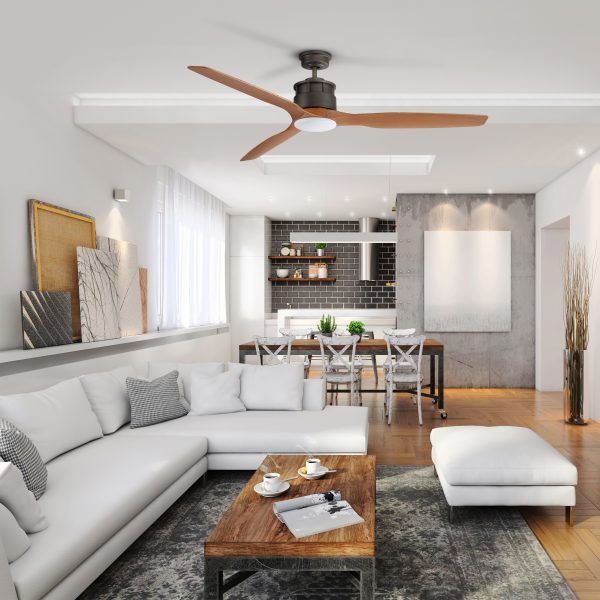
Getting Ceiling Fans Right for Australian Homes
Choosing the wrong fan — wrong blade span, wrong motor, wrong mounting depth — is an easy mistake that affects comfort every single day. The guidance below covers the decisions that actually matter before you buy.
Blade Span and Room Size
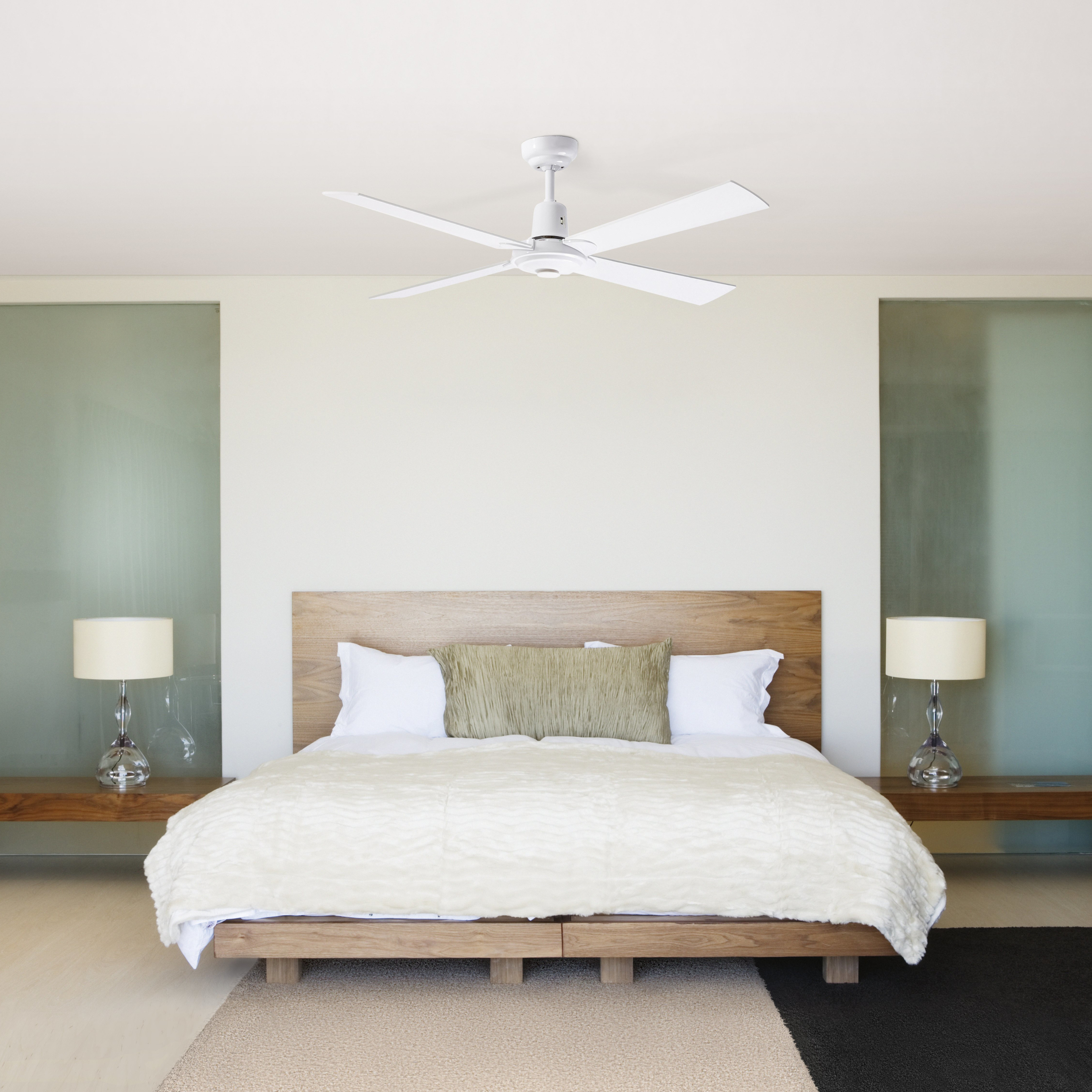
As a starting point, match blade span to the room’s footprint. Rooms up to about 10 m² (a small bedroom) suit fans in the 90–107 cm range. Living areas between 15 and 25 m² typically call for 122–132 cm spans, and larger open-plan spaces often work best with blades from 140 cm and up, or multiple fans positioned across the ceiling. Blade count matters less than you’d think — motor quality and pitch angle have a far greater effect on airflow.
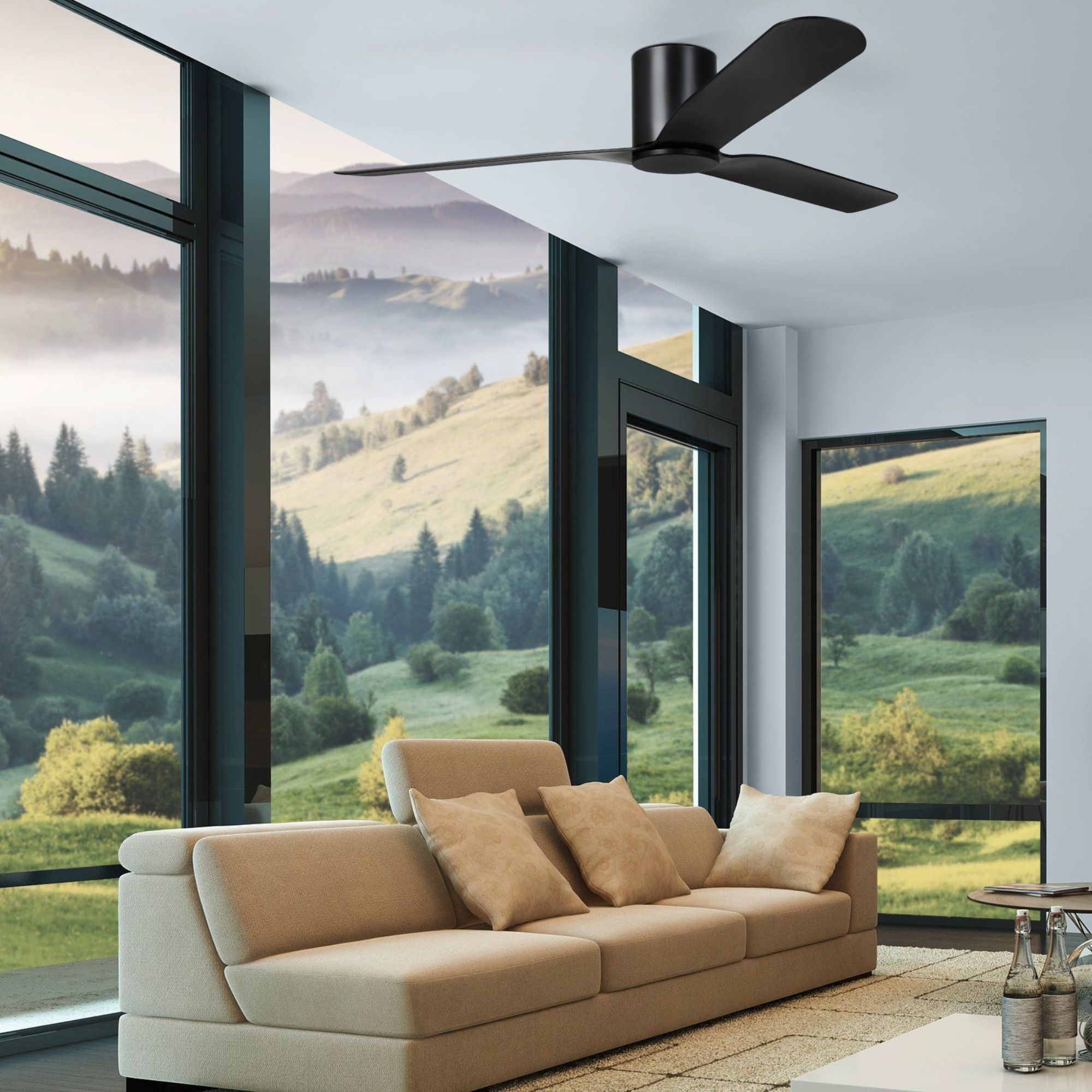
Ceiling height is equally important. Australian building code and general safety practice require at least 2.1 m of clearance from the floor to the blade, so in a standard 2.4 m room you have roughly 30 cm to play with for the fan body and any downrod. Low-profile or “hugger” fans mount flush against the ceiling and are designed specifically for this situation. If you have higher ceilings, a longer downrod brings the fan into the occupied zone where it moves air most effectively.
AC vs DC Motors — Which Should You Choose?
AC (alternating current) motors are the traditional standard. They’re reliable, suited to wall-controller or basic remote operation, and often more affordable upfront. DC (direct current) motors convert power internally, running cooler, quieter, and with far greater energy efficiency — typically 15–35 W compared to 50–75 W for a comparable AC model. DC fans also tend to offer six or more speed settings rather than the usual three, which makes a real difference for bedrooms. If electricity costs are a consideration — and in Australia they should be — DC ceiling fans pay back the price difference quickly.
Summer and Winter Reverse Mode
Most modern fans include a reverse-direction switch, either on the motor housing or via remote. In summer, blades should spin anti-clockwise (when viewed from below) to push air straight down and create a wind-chill effect. In winter, reversing to clockwise at a low speed draws cool air up and gently displaces the warm air that collects near the ceiling — useful in rooms with high raked ceilings. Not every model includes this feature, so check the product specifications if year-round operation matters to you.
Lights, Remotes, and the Alfresco Question
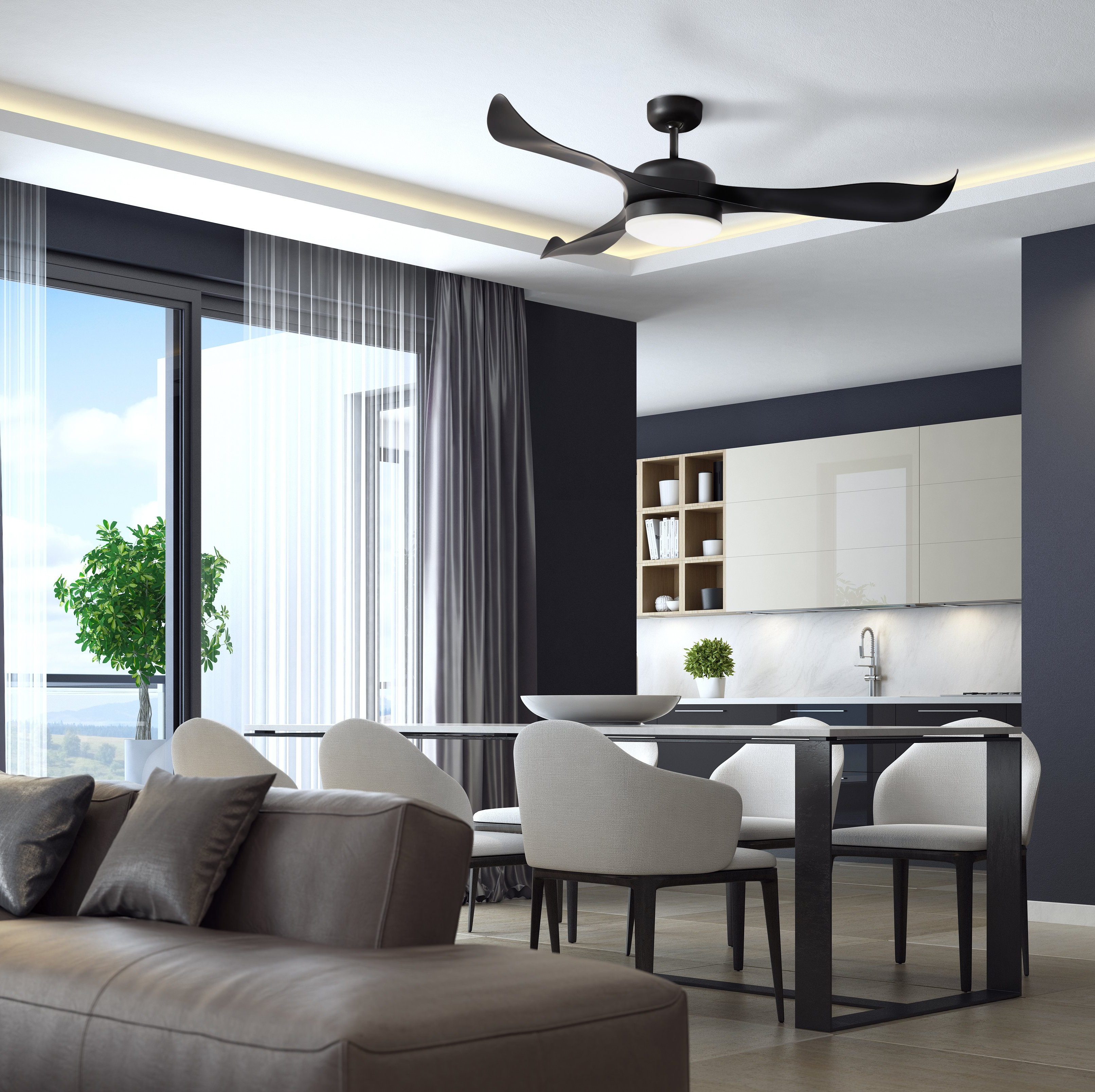
Adding a light to your fan is the single most popular upgrade decision. Ceiling fans with lights combine two ceiling penetrations into one, which simplifies wiring and suits rooms where a separate pendant or downlight cluster isn’t practical. Look for designs with compatible dimmable drivers if you want lighting control — selected models support 3-step touch dimming or full remote dimming, so check each fitting’s specifications before purchasing.
Remote controls and wall controllers are available on selected models. Some fans are remote-only; others accept either. If you’re replacing an existing fan on a wired wall switch, confirm compatibility with your electrician — all hardwired ceiling fan installation in Australia is licensed electrical work.
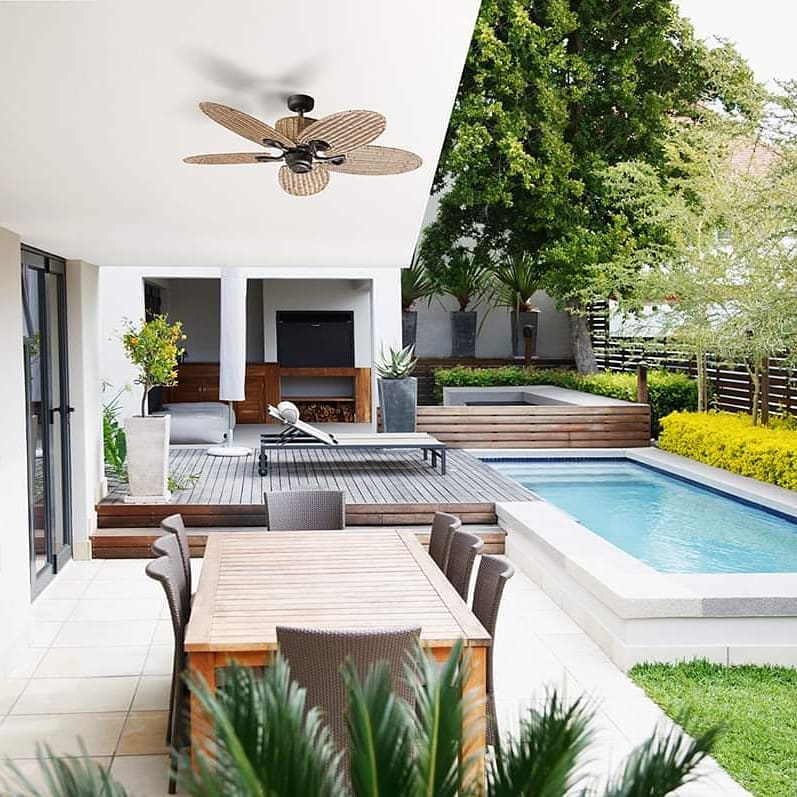
For covered outdoor areas, choose a fan rated for the exposure level of your space. Our outdoor ceiling fans are curated with coastal and high-humidity environments in mind — check each fitting’s IP rating to confirm suitability for your specific location, whether that’s a fully covered patio or a semi-exposed pergola.
Ceiling Fans FAQs
What size ceiling fan do I need for my room?
A general rule is 90–107 cm blade spans for small bedrooms, 122–132 cm for mid-sized living rooms, and 140 cm or more for large open-plan areas. Also account for ceiling height — you need a minimum of 2.1 m clearance from blade to floor, so low ceilings may require a flush-mount or hugger-style fan.
Are DC ceiling fans worth the extra cost?
For most Australian households, yes. DC fans use significantly less electricity than AC equivalents, run quieter (ideal for bedrooms), and offer more nuanced speed control. The upfront price gap has narrowed considerably, and lower running costs typically offset the difference within a few years given Australian electricity prices.
Can I install a ceiling fan myself?
Not legally in Australia. Connecting any hardwired fitting to your 240 V mains wiring must be carried out by a licensed electrician. You can select and purchase the fan yourself, but engage a qualified tradesperson for installation — this also ensures any warranty remains valid and your home insurance isn’t affected.
Do ceiling fans work in winter?
Yes — when set to reverse (clockwise rotation at low speed), a ceiling fan redistributes the warm air that accumulates near the ceiling back into the living zone. This is particularly effective in rooms with high or raked ceilings where heat stratification is most pronounced.
What’s the difference between an indoor and outdoor ceiling fan?
Outdoor fans are constructed with moisture-resistant materials and carry an IP rating suited to damp or wet environments. Standard indoor fans are not designed for humidity, salt air, or direct exposure to weather. Always check each fitting’s IP rating and confirm it matches your installation location before purchasing.