

Wall Sconce Placement Guide: Heights, Spacing and Where They Work Best
23rd Oct 2026
Mount a wall sconce so the centre of the fitting sits between 1.5 and 1.7 metres off the floor in most living and hallway situations. Bedside sconces drop lower, typically 1.2 to 1.4 metres, and mirror-flanking sconces work best at eye level around 1.5 to 1.6 metres. Get those three numbers right and most placement decisions fall into place.
The Heights That Actually Matter
The 1.5–1.7 m rule for hallways and living rooms comes from the same logic as a standard light switch height: it keeps the fitting within comfortable visual range without the shade or bare globe sitting at eye level and causing glare. At standard Australian ceiling heights of 2.4 m, that puts the fitting roughly 70 to 90 cm below the ceiling, which reads as intentional rather than crammed up high or dropped too low.
Bedside sconces are the one exception almost everyone gets wrong. Most people hang them too high, at the same height they’d use in a hallway, then wonder why reading in bed is uncomfortable. The goal is for the lower edge of the shade or the light source itself to sit roughly 50 to 70 cm above the top of your mattress. For a typical bed with a 60 cm mattress and base, that puts the centre of the fitting somewhere between 1.2 and 1.4 metres off the floor. Measure from your actual mattress top, not from a number you read online, because bed heights vary more than people expect.
Bathroom and vanity mirror flanking is its own scenario. Place sconces on either side of the mirror so the centre of the fitting is at your eye level, typically 1.5 to 1.6 metres. Sconces above a mirror tend to cast shadows under the chin and nose, which is why side placement is preferred for task lighting. If you only have space for one fitting above the mirror, choose a wide diffuse source to soften shadows rather than a directional spot.
Spacing Along a Hallway or Feature Wall
For a row of wall sconces along a hallway, 2.4 to 3 metres between fittings is the reliable range. Closer than 2.4 m and the repetition starts to feel busy; further than 3 m and you’ll see dark patches between pools of light, particularly with directional up-down styles. The exact spacing depends on the lumen output of the fitting and how much of the light is directed forward versus up and down. We get asked this most weeks, and the honest answer is to place one fitting, look at the light spread on the wall, then measure where the illumination starts to fall off.
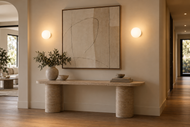
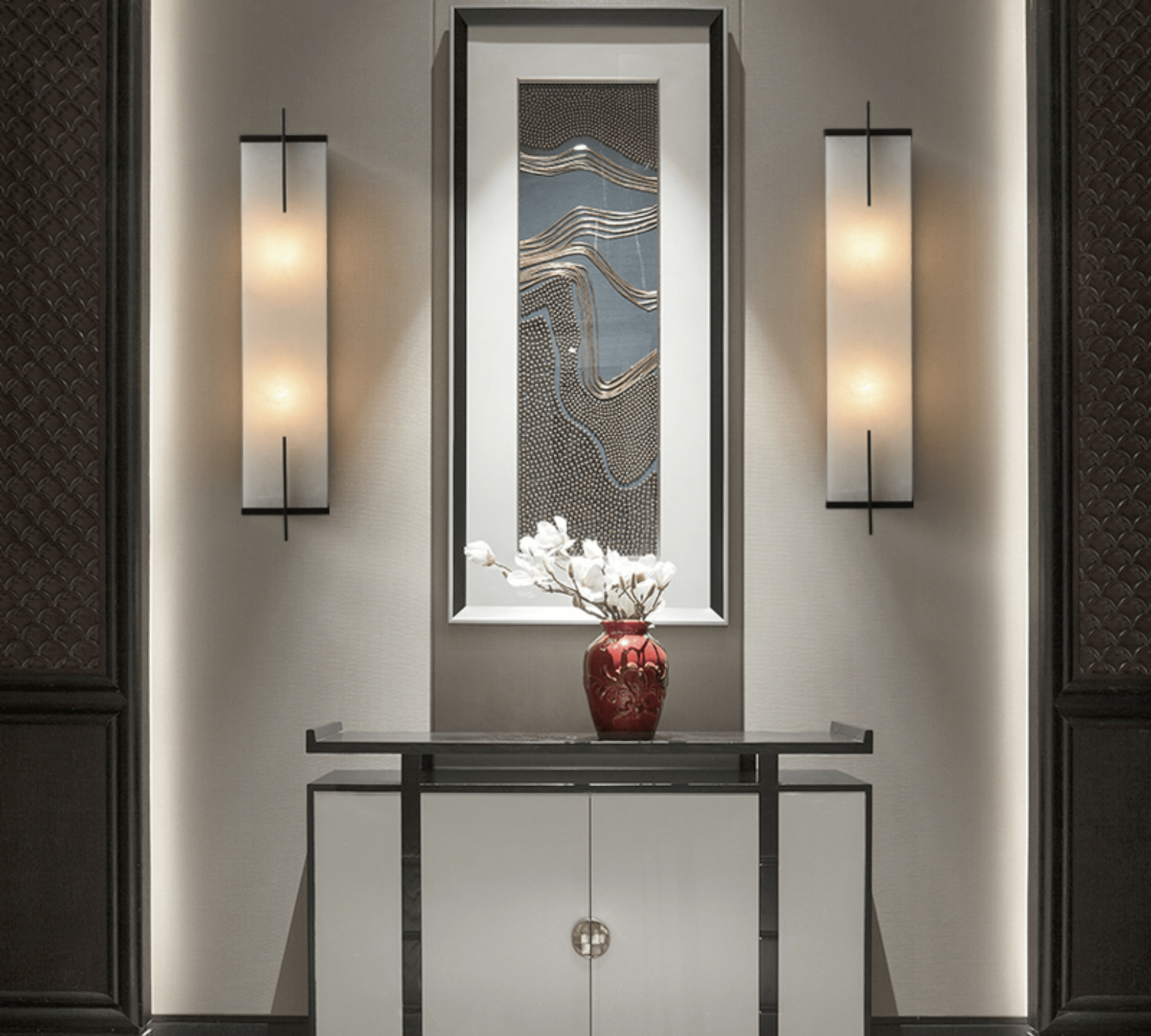
On a feature wall or either side of a fireplace, symmetry matters more than any specific number. Centre each fitting relative to what it’s flanking, not at an arbitrary height. If the artwork is 90 cm tall and hangs at 1.5 m centre, put the sconces at the same centre height so they read as a composition rather than an afterthought.
Up-Down, Shaded or Swing-Arm: Which Style Where
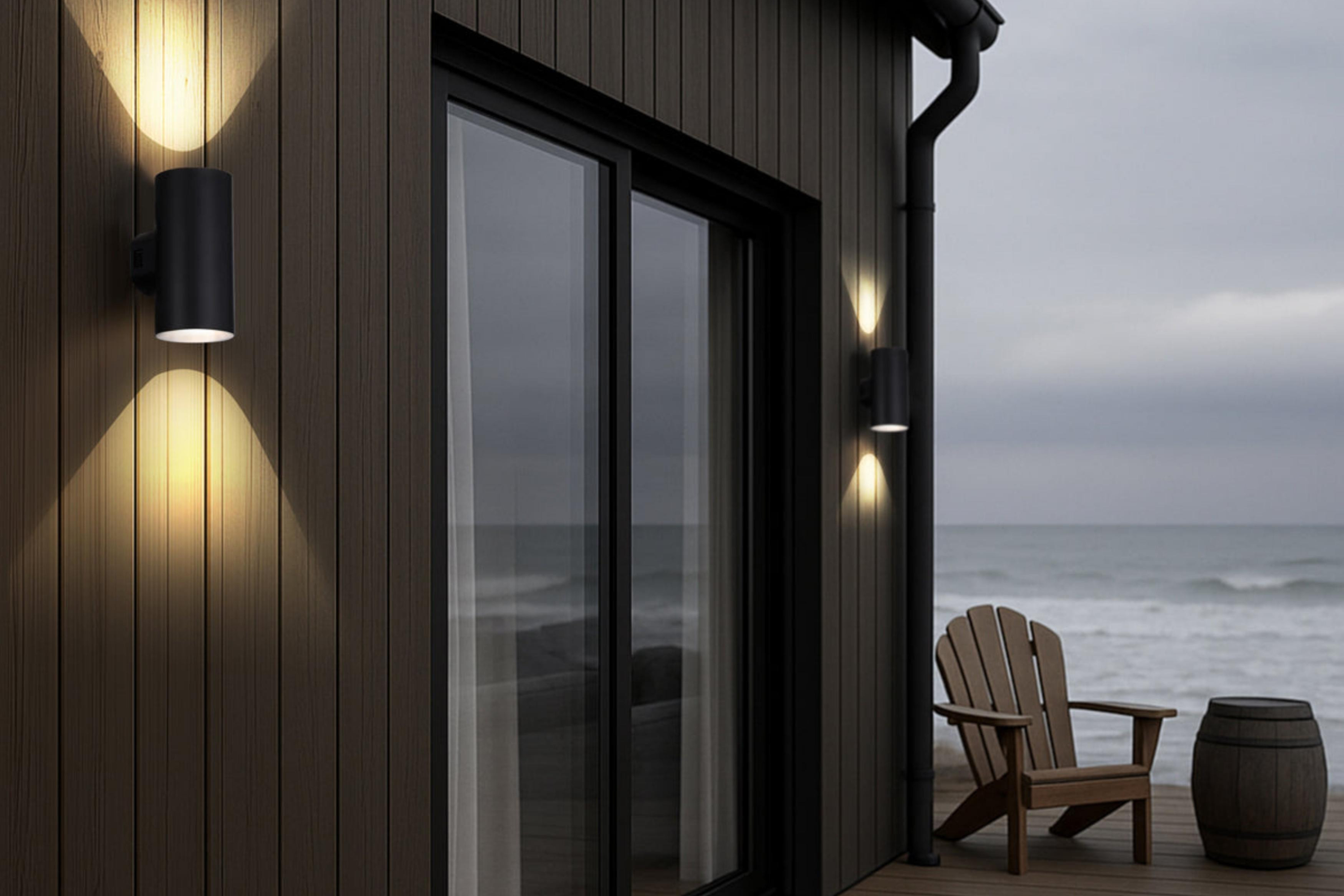
Up-down sconces (also called bi-directional or open-ended) project light both toward the ceiling and toward the floor. They work well in hallways and on exterior walls where you want broad ambient coverage and a graphic shadow pattern on the surface. They’re less suited to bedside use because the upward throw can disturb a sleeping partner.
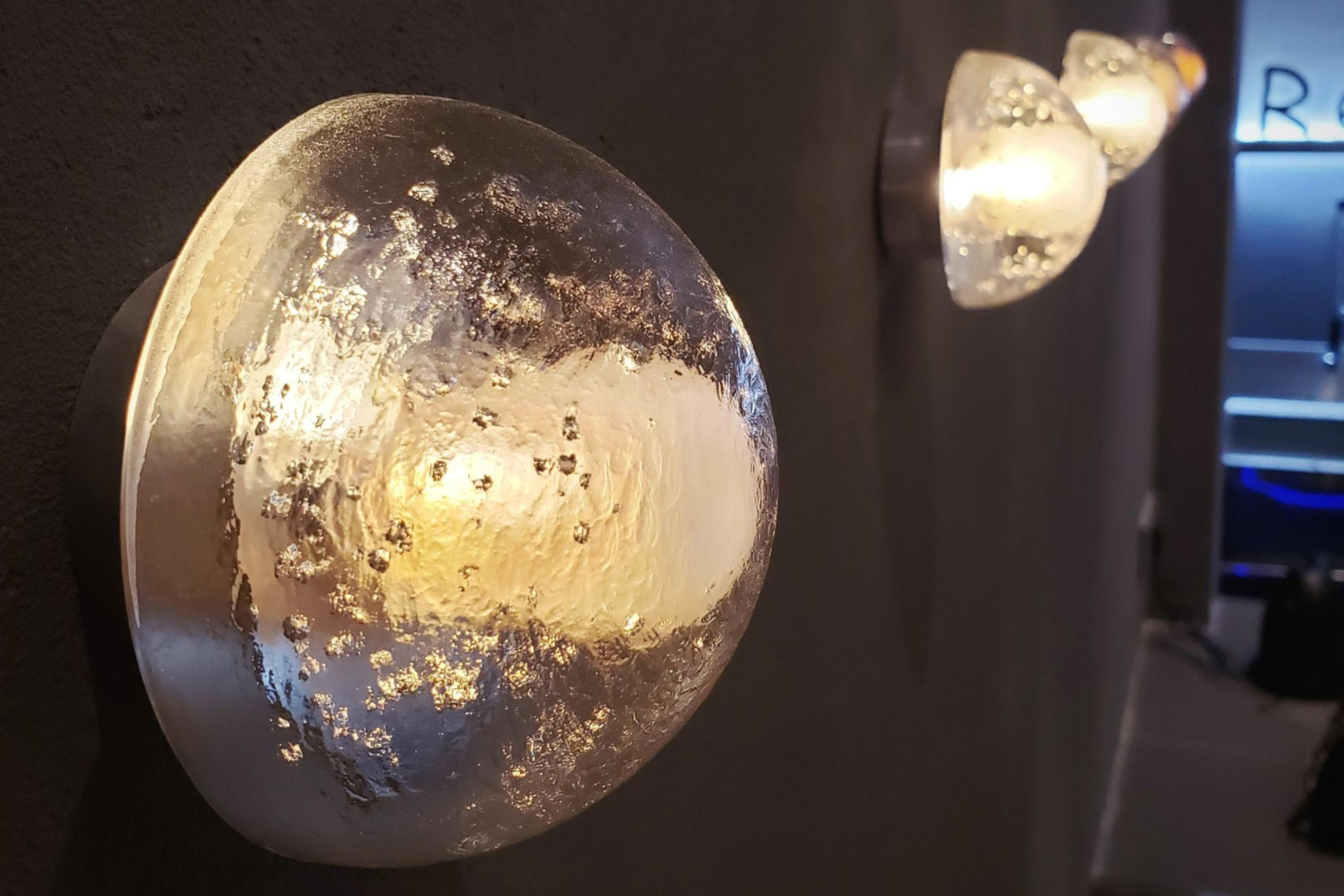
Shaded sconces with a closed bottom direct light downward and sideways, which makes them good for reading nooks, beside sofas and anywhere you want a warm pool of light without ceiling bounce. They’re the classic wall light form and they suit most wall light applications in living areas and bedrooms.
Swing-arm sconces are the practical choice for bedside wall lights where two people in the same bed read at different angles, or where you want to pull the light closer to a book without getting out of bed. They require a bit more wall depth clearance when extended, so check the arm length on the product page before ordering for a narrow space.
Hardwired vs Plug-In Sconces
Hardwired sconces look cleaner because there’s no visible cord, but in Australia, connecting to your home’s 240V wiring is licensed electrical work. You’ll need a qualified electrician to run cable in the wall and install the fitting. That’s worth budgeting for if you’re renovating or building, because the result is a proper installation with no compromise on fitting choice.
Plug-in sconces connect to a standard GPO and are a legitimate option for renters or rooms where running new cable isn’t practical. The cord is usually concealed with a fabric sleeve or a wall-mounted cable channel. The trade-off is that your fitting choice is limited to models designed for plug-in use, and the placement is constrained by where your power points are.
Outdoor and Coastal Considerations
Outdoor sconces need an appropriate IP rating for where they’ll be installed. A covered porch or undercover alfresco typically calls for at least IP44. A fully exposed wall facing the weather needs IP65 or above. Check the product page for the rated IP before purchasing, because “outdoor” labelling alone doesn’t tell you how much weather exposure a fitting can handle.
In coastal areas with salt air, material choice matters as much as IP rating. Powder-coated aluminium and marine-grade stainless fittings hold up far better than chrome-plated brass or standard steel over time. Aged brass or raw aluminium finishes can be a good call because they oxidise gracefully rather than showing corrosion as a defect.
FAQs
How high should a wall sconce be mounted?
In most rooms, mount the centre of the fitting at 1.5 to 1.7 metres from the floor. For bedside sconces, drop this to 1.2 to 1.4 metres, or roughly 50 to 70 cm above your mattress top. Mirror-flanking sconces work best centred at eye level, around 1.5 to 1.6 metres.
How far apart should wall sconces be spaced in a hallway?
A spacing of 2.4 to 3 metres between fittings works for most hallways. The right distance depends on the light spread of the specific fitting, so if you’re unsure, install one first and see where the illumination fades before committing to the full run.
Do I need an electrician to install a wall sconce in Australia?
Yes, if the fitting is hardwired into your 240V circuit. Connecting to fixed wiring is licensed electrical work in Australia and must be done by a registered electrician. Plug-in sconces that connect to a standard GPO don’t require an electrician.
Can wall sconces be used outside?
Yes, provided the fitting has a suitable IP rating for the level of exposure. Covered outdoor areas generally need IP44 as a minimum, while fully exposed walls need IP65 or higher. In coastal environments, also check the fixture material for salt-air resistance.