

Plug-In Wall Lights: Great Lighting Without an Electrician
11th Nov 2026
Plug-in wall lights mount to the wall like any hardwired fitting but run a cord down to a standard 240V GPO instead of connecting to your home’s wiring. That means no licensed electrician, no patching walls, and no problem if you’re renting. They’re a practical solution for bedside reading lights, hallway accents, and home-office task lighting wherever a power point is reasonably close.
Where plug-in wall lights actually work well
The sweet spot is any spot where a wall light would look great but hardwiring isn’t worth the cost or the disruption. We get asked this most weeks, usually by renters or people in older homes where chasing cables through solid brick is a serious job.
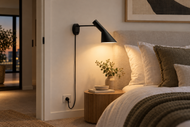
Bedside reading lights are the most popular use. A plug-in sconce on each side of the bed frees up the nightstand, directs light exactly where you need it, and can be switched off without getting up if you pick a model with an inline switch. Standard Australian bedrooms have a GPO on at least one side of the bed, often both.
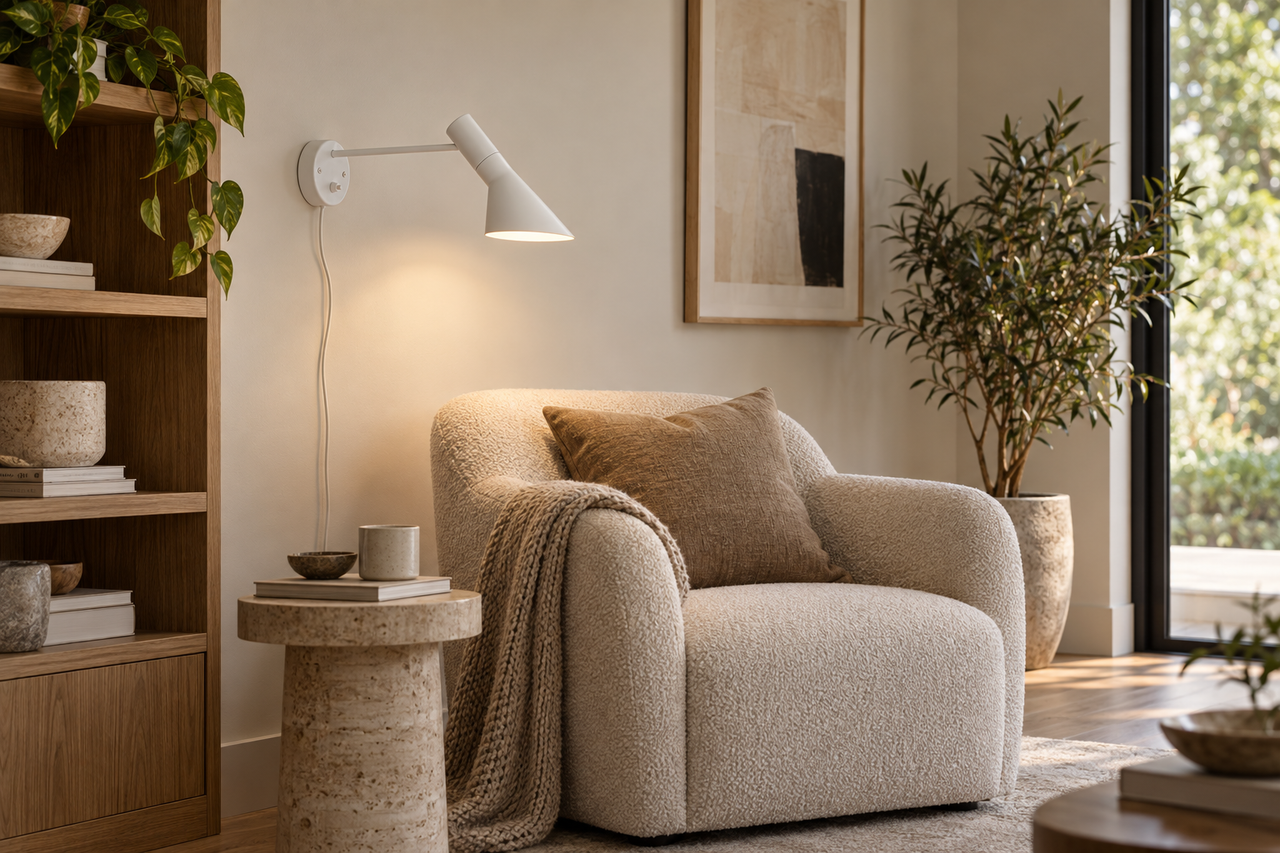
Reading corners benefit from a wall-mounted swing-arm or adjustable head, putting light over your shoulder rather than bouncing it off a ceiling. A plug-in version installed at around 1.5 to 1.6 metres from the floor works well for seated reading.
Hallways can be tricky because power points are rare along a hallway wall. Check whether there’s a point around a corner or at the end you can route a cord to discreetly. If not, this is one place where a hardwired fitting is genuinely the better answer.
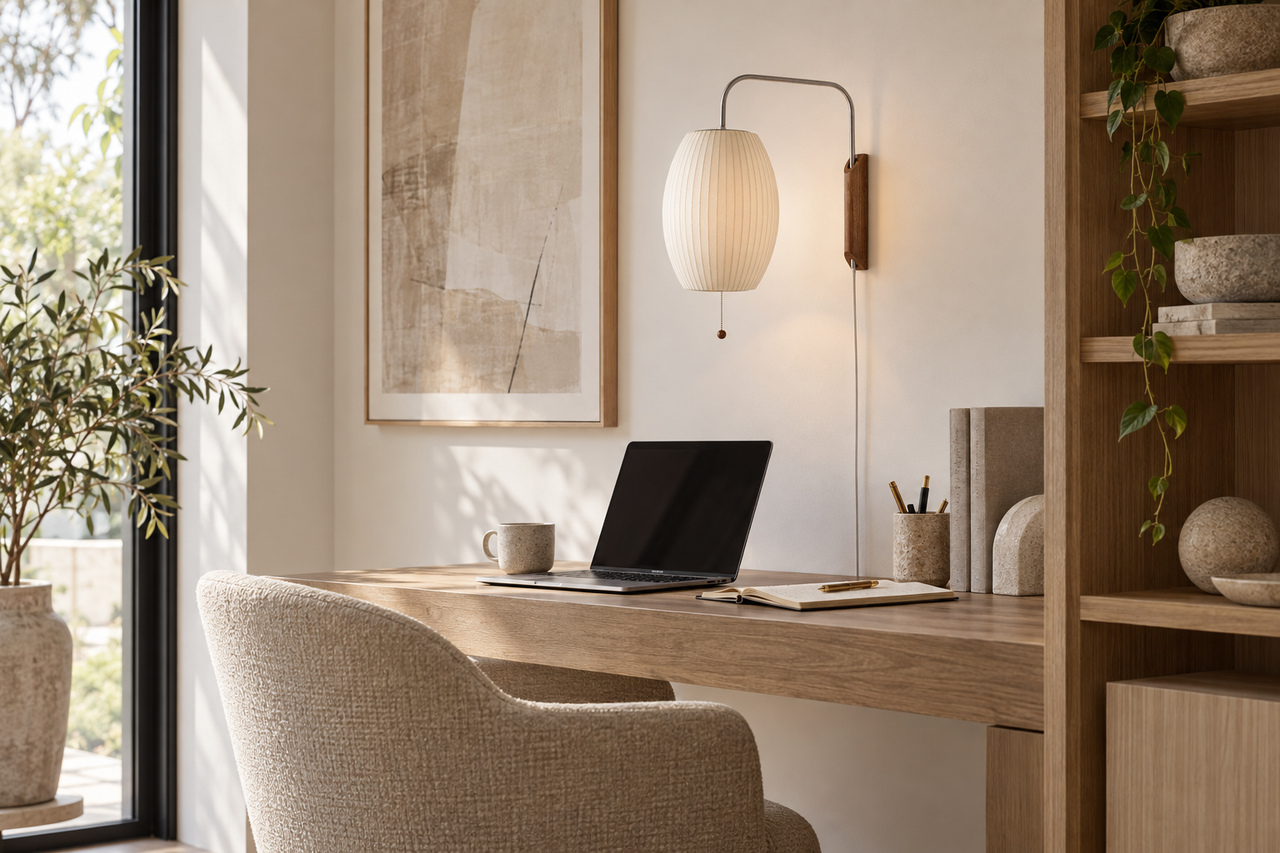
Above a desk, a plug-in wall light gives directional task light without taking up desk space. Most home offices already have a GPO strip or skirting board points nearby, so the cord run is short.
The cord: be honest with yourself about it
A visible cord is the trade-off. Some people are fine with it; others find it distracting. Before you buy, stand at the spot you have in mind and trace the path the cord would take from the fitting down to the GPO. If that’s 300mm behind a bedhead, you’ll never see it. If it’s 1.2 metres down a painted plaster wall in a dining room, you’ll notice it every day.
There are a few ways to manage it. Cord covers (also called cable raceways) are paintable plastic channels that sit flush against the wall and hide the cord inside. They’re available from hardware stores, take paint well, and are removable without damage to the plaster underneath. Renters should check their lease before installing anything adhesive, but most cord covers use small removable adhesive strips rather than screws.
Routing the cord behind furniture is the simplest option when the layout allows. A bedhead, a bookshelf, or a narrow console table can conceal most of the drop. At the desk, the cord often disappears behind a monitor arm or cable tray.
Some plug-in fittings have a fabric-braided cord that’s designed to be seen, which makes the whole thing feel deliberate rather than makeshift. Worth looking for if you can’t hide the cord entirely.
Switches and dimming
Most plug-in wall lights include an inline switch on the cord, which is useful when the fitting is out of arm’s reach. For bedside use, check that the switch is positioned conveniently once the light is installed, not buried behind the bedhead.
Dimming is less straightforward than with hardwired lights. A small number of plug-in models include an inline rotary dimmer, which works without any changes to the GPO. Others are compatible with a smart plug that handles dimming through an app. If dimming matters to you, check the product page before buying rather than assuming it’s included. Most plug-in wall lights in the mid-range are on/off only.
You can’t use a standard wall dimmer switch with a plug-in fitting because the light isn’t wired to that circuit. That’s one of the few functional differences compared to a hardwired equivalent.
Fixing to the wall without damaging it
The fitting itself still needs to attach to the wall. Most plug-in wall lights come with screws and wall anchors, designed for plasterboard. Standard Australian plasterboard is 10mm or 13mm thick, and the plastic anchors included are usually fine for the weight of a light fitting. If you’re unsure, pick up a pack of metal plasterboard anchors from a hardware store; they hold better and are still removable.
Renters should use the smallest anchor the fitting allows and fill the holes with Polyfilla when they leave. Two small screw holes are far less drama than a wall-mounted TV bracket. That said, check your lease or ask the agent first if you’re uncertain.
Avoid mounting into a wall cavity where there’s any risk of hitting electrical cabling or plumbing. A stud finder or a cable detector (both under $30 at hardware stores) will confirm the area is clear.

Style choices and moving to hardwired later
The plug-in wall lights available now cover a lot of ground stylistically, from minimal white plaster shades to fabric cocoon shapes and industrial metal arms. They’re not the afterthought they used to be.
One thing worth knowing: many styles that come in a plug-in version also exist as a hardwired fitting. If you’re renting now but buying later, you can often pick the style you want as a plug-in, then switch to the hardwired version in your own home. Browse the broader wall lights range to compare both formats side by side, or head straight to bedside wall lights if that’s the application you have in mind.
Plug-in fittings are also a low-risk way to try wall lighting before committing to an electrician. If you install one and decide the style or position isn’t right, you unscrew it, fill two holes, and try something different. That’s a reasonable amount of flexibility for a lighting decision.
FAQs
Can I use a plug-in wall light in a rental property?
Yes, in most cases. The fitting plugs into an existing GPO, so there’s no electrical work involved. Mounting to the wall requires small screws and plasterboard anchors, which leave minor holes that can be filled when you vacate. Check your lease first, but most standard rental agreements in Australia allow minor picture hooks and similar fixings.
How do I hide the cord on a plug-in wall light?
The easiest option is routing it behind furniture such as a bedhead or bookshelf. If the cord is exposed, paintable cord covers (cable raceways) from any hardware store will conceal it neatly against the wall. Some fittings come with a fabric-braided cord that looks intentional if left visible.
Do plug-in wall lights work with a dimmer switch?
Not with a standard wall dimmer switch, because the light runs off a GPO rather than a switched circuit. Some models include an inline rotary dimmer on the cord, and others work with a compatible smart plug. Check the product page for the specific fitting you’re considering.
What height should I mount a plug-in wall light?
For bedside reading, the bottom of the shade is usually best at around 1.4 to 1.5 metres from the floor, which puts the light roughly at eye level when you’re sitting up in bed. For a reading chair, aim for 1.5 to 1.6 metres. These are starting points; adjust for your own seat height and the shade style.