

Moroccan Lighting: A Style Guide for Australian Interiors
7th Oct 2026
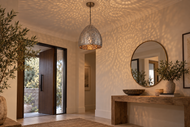
A Moroccan lamp works by doing something no plain pendant can: it turns light itself into decoration. The pierced metalwork or coloured glass panels cast intricate lattice shadows across walls and ceilings, transforming an ordinary room into something that feels genuinely considered. Whether you’re drawn to the drama of a filigree dome over a dining table or a softly glowing lantern in an entry hall, Moroccan-style lighting slots into far more Australian interiors than you might expect.
What Makes Moroccan Lighting Distinctive
The defining characteristic is the interplay of light and shadow. Traditional Moroccan lanterns were crafted from hand-pierced brass or copper, with geometric star patterns, arabesques, and floral motifs cut or stamped through the metal. When a globe illuminates the piece, those patterns project outward in dramatic silhouette — an effect that reads as exotic in any setting but scales beautifully from a riad courtyard to a Sydney terrace or a Melbourne apartment.
Modern interpretations keep the essential geometry but update the execution. You’ll find dome pendants in matte black, antique brass, nickel, and aged copper. The shadow play is still there; the silhouettes just feel a touch more contemporary. Coloured glass panels — amber, red, cobalt — add warmth to the spill of light itself, whereas all-metal pierced designs give a crisper, more architectural effect. Neither is more ‘correct’; it depends on whether you want the light to feel warm and enveloping or graphic and dramatic.
Where Moroccan Lighting Works Best in Australian Homes
Entry Halls
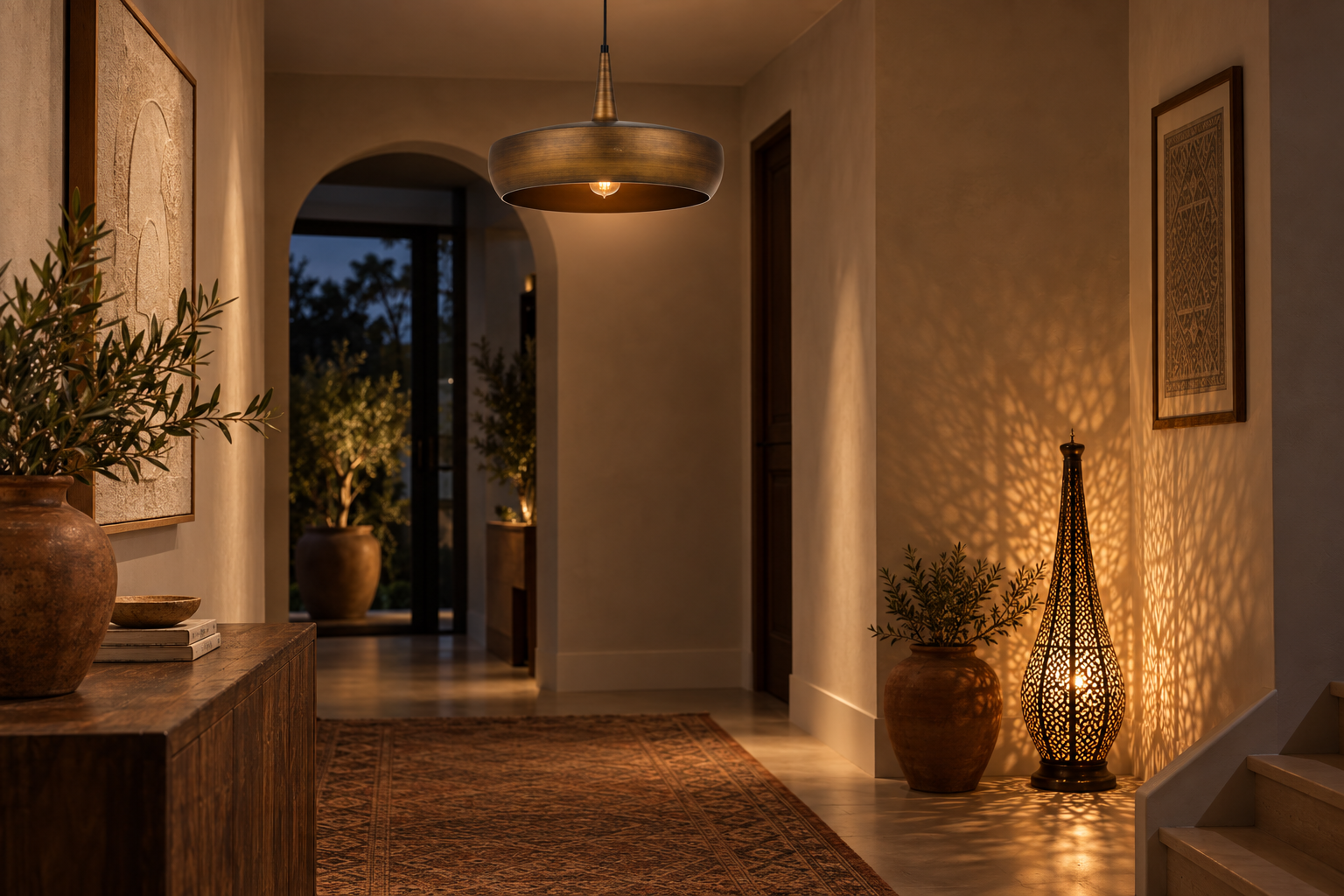
The entry is the single best spot to install a Moroccan pendant in an Australian home. You only need the light switched on for short bursts, so the mood-over-utility trade-off is negligible. More importantly, a pierced metal lantern or dome hanging at around 2.0–2.1 m from the floor (accounting for our standard 2.4 m ceilings) greets guests with an immediate sense of character. In narrow hallways where a large fitting would feel oppressive, a slender cylindrical lantern or a smaller dome keeps the drama without the bulk.
Alfresco & Outdoor Entertaining
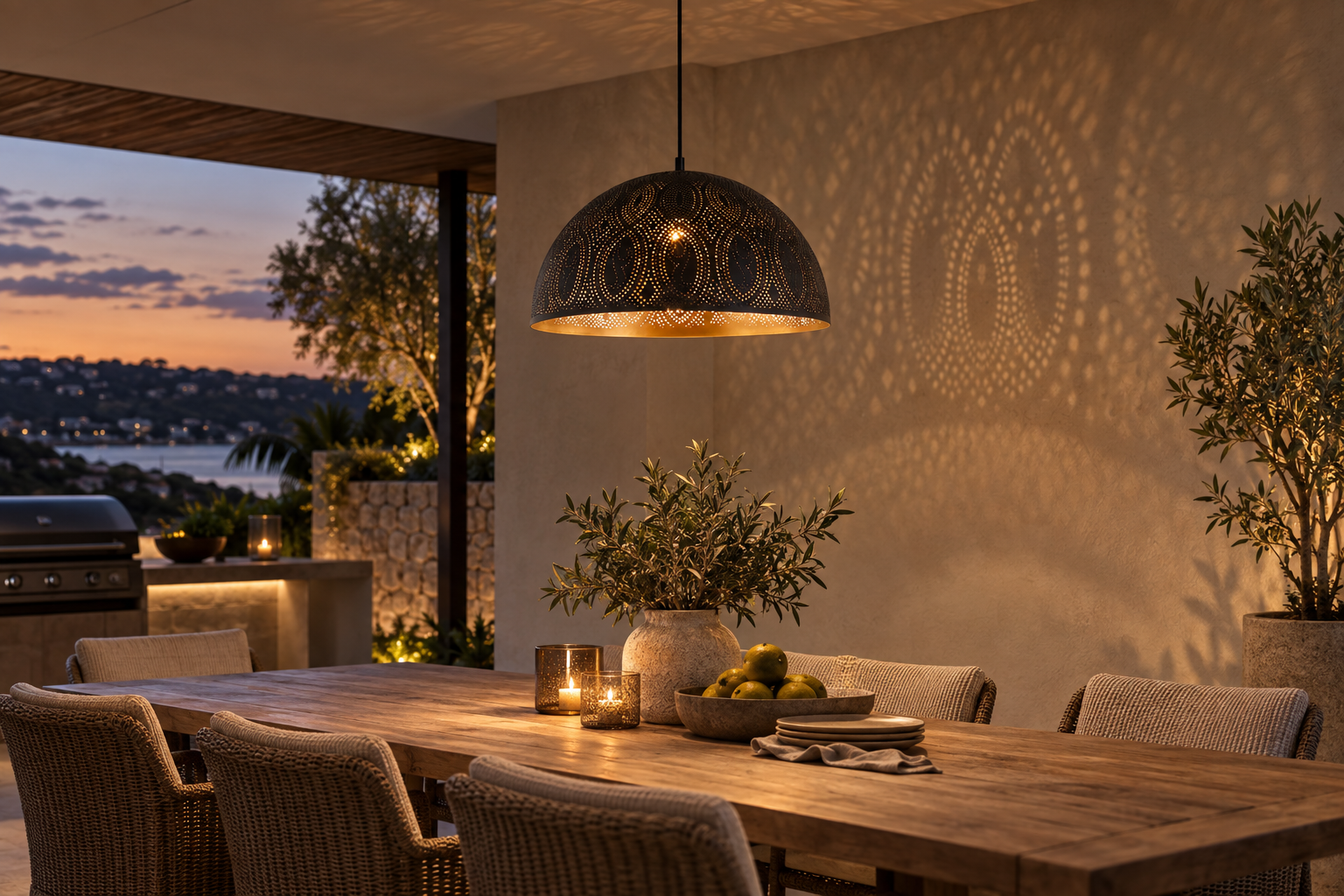
Australia’s outdoor living culture is a natural match for Moroccan style. A covered alfresco pergola or verandah benefits enormously from the warm, dappled light that pierced lanterns provide — the shadows animate the space after dark in a way that a bare bulb or recessed downlight simply cannot. For outdoor installations, always check the IP rating on the product page; coastal homes near salt air need at least IP44, and anything exposed to direct rain should be IP65 or higher. Selected models in our Moroccan lighting range are rated for covered outdoor use, but confirm specifications before purchase.
Bedrooms
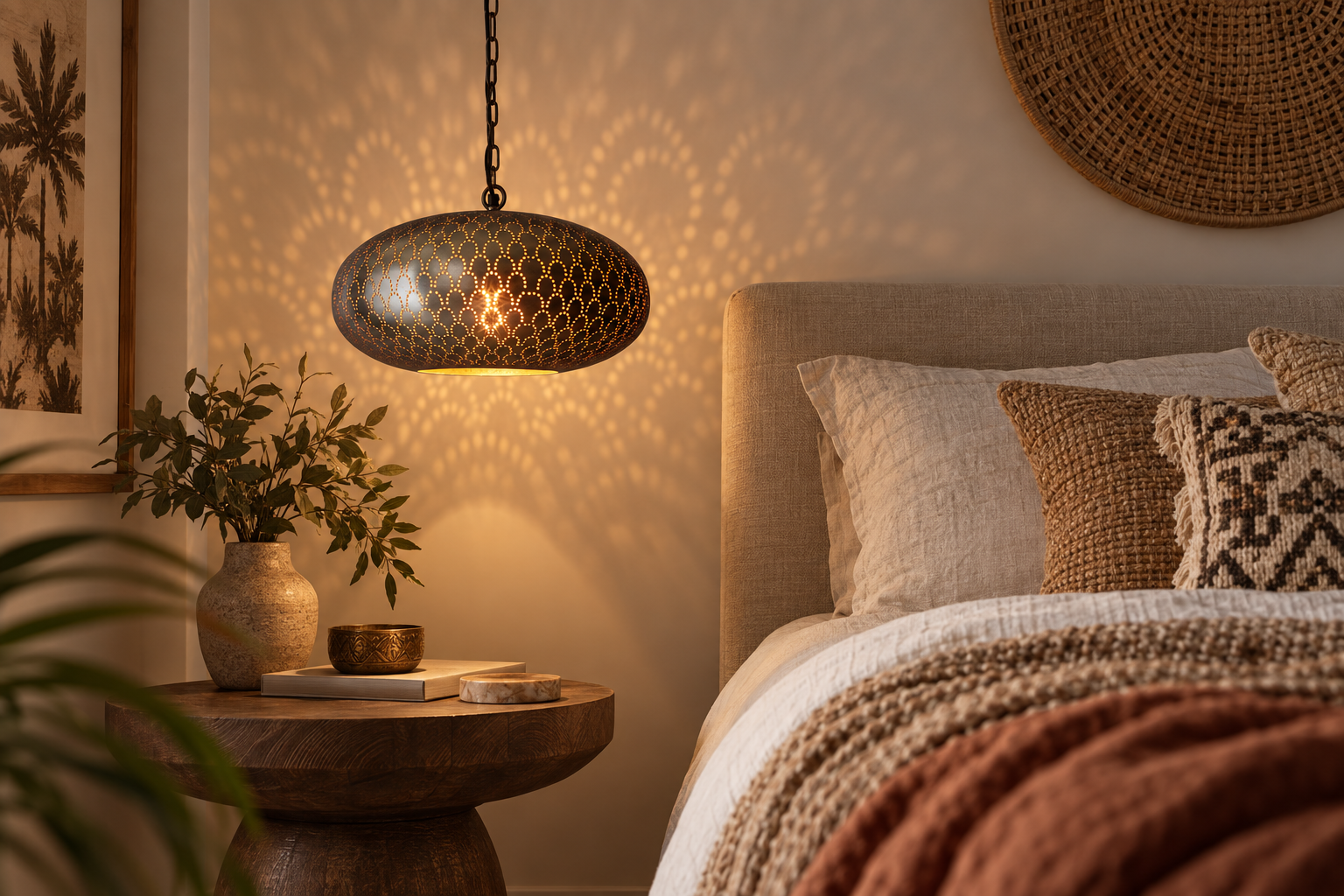
In bedrooms, the shadow-play effect works particularly well when the fitting is on a dimmer (check that both the fitting and globe are dimmable — not all combinations are compatible). At low levels, a Moroccan pendant over a bedside or hanging centrally creates an ambience closer to candlelight than electric lighting. Pair with warm-white globes (2,700 K) rather than cool-white to keep the mood relaxed. Pendant height above a bedside table should sit between 45 and 60 cm from tabletop to the base of the fitting, so for a standard 50 cm bedside table in a 2.4 m room, your cord or drop length will be roughly 1.5–1.6 m.
Pairing Moroccan Pieces with Modern Australian Interiors
The easiest pairing is with bohemian lighting and eclectic schemes: rattan furniture, layered textiles, terracotta pots, and timber floors create a relaxed, well-travelled aesthetic that Moroccan pieces complement naturally. But Moroccan lighting also holds its own in cleaner, more minimal interiors. A single matte-black dome pendant against white walls is architectural rather than fussy — the filigree becomes a graphic element, not a decorative overload.
The key is restraint elsewhere. If the pendant is doing the decorative heavy lifting, keep surrounding furniture and wall treatments quieter. Conversely, in a room already rich with pattern and colour — think Kilim rugs, printed cushions, exposed brick — a simpler Moroccan silhouette (less piercing, more solid form) prevents the space from tipping into chaos.
Metal Finish Pairings
| Moroccan Finish | Works Well With | Avoid |
|---|---|---|
| Matte Black | White walls, timber, concrete, rattan | Heavy dark-stained timber (too sombre) |
| Antique Copper | Terracotta, warm neutrals, linen, leather | Cool greys, chrome fixtures |
| Antique Brass / Gold | Jewel tones, velvet, dark walls, marble | Brushed nickel or stainless elsewhere |
| Nickel / Silver | Crisp white, grey, blue-green palettes | Warm amber tones (colour temperature clash) |
Moroccan Lanterns vs. Pendants: Which Format Suits You
The lantern lighting format — a fully enclosed geometric cage, often hexagonal or octagonal — is the more traditional Moroccan form. It suits entry halls, alfresco spaces, and stairwells where the fitting is viewed from multiple angles and needs to look complete from all sides. Dome and disc pendants are more directional: the decorative detail faces downward, making them better suited to dining tables, kitchen islands, and bedside positions where you’re primarily looking up or across at the fitting.
Floor lamp versions of the Moroccan style — tall pierced-metal columns or table lamp bases with fabric or glass shades — introduce the shadow effect at a lower, more intimate level. They’re excellent in reading corners, beside sofas, or on outdoor side tables for evening entertaining. Because they’re not hardwired, they’re also the easiest way to trial the aesthetic before committing to a ceiling installation (which in Australia must be carried out by a licensed electrician).
FAQs
What kind of globe should I use in a Moroccan lamp?
A warm-white globe at 2,700 K gives the richest shadow effect and the most flattering light through coloured glass panels. If the fitting has a fully enclosed metal body with small piercings, a clear or lightly frosted globe will produce sharper, more defined shadow patterns than an opal globe. Always check the maximum wattage stated on the product page — small enclosed fittings can overheat if over-lamped.
Can a Moroccan pendant be used outdoors in Australia?
Selected models are suitable for covered outdoor areas, but you need to confirm the IP rating before buying — this varies by product. Coastal environments and areas exposed to salt air or driving rain require a higher IP rating and finishes that resist oxidisation. Check the product page or contact the retailer to confirm suitability for your specific outdoor condition.
How do I style a Moroccan lamp in a contemporary home without it looking out of place?
Choose a finish and silhouette that connects to the rest of the room — a matte-black dome, for example, reads as contemporary even with Moroccan proportions. Keep surrounding décor relatively restrained so the pendant is a focal point rather than one busy element among many. One Moroccan piece in a modern interior typically looks deliberate and well-curated; several in the same space can start to feel themed.
Do I need an electrician to install a Moroccan pendant light in Australia?
Yes. Any hardwired ceiling installation — including replacing an existing pendant — must be carried out by a licensed electrician in all Australian states and territories. Plug-in floor lamps and table lamps are the exception, as these require no hardwiring and can be positioned yourself. Budget for an electrician when planning a pendant installation.