

E27, B22 or GU10? Australian Light Bulb Bases Explained
26th Oct 2026
The base code stamped on a light bulb tells you the fitting type and pin or thread size. Australia uses five base types in most homes: E27 Edison screw, B22 bayonet cap, E14 small Edison screw, GU10 twist-lock and G9 loop pin. Get the wrong one and the bulb simply won’t fit, so it’s worth knowing how to read the code before you buy.
How to read a bulb base code
Every base code follows a simple pattern. The letter describes the connection type, the number describes the size in millimetres (for screw and pin types) or the pin spacing in millimetres (for bi-pin types).
- E = Edison screw (threaded)
- B = Bayonet cap (push-and-twist pins)
- G = Pin base (two pins or a loop)
- MR = Multifaceted reflector (describes the lamp shape, not just the base)
So E27 means an Edison screw base that is 27 mm in diameter. B22 means a bayonet cap that is 22 mm in diameter. Once you know this, the codes stop being confusing and start being genuinely useful.
The six bases you’ll find in most Australian homes
E27, the Edison screw
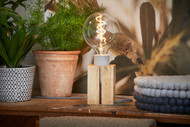
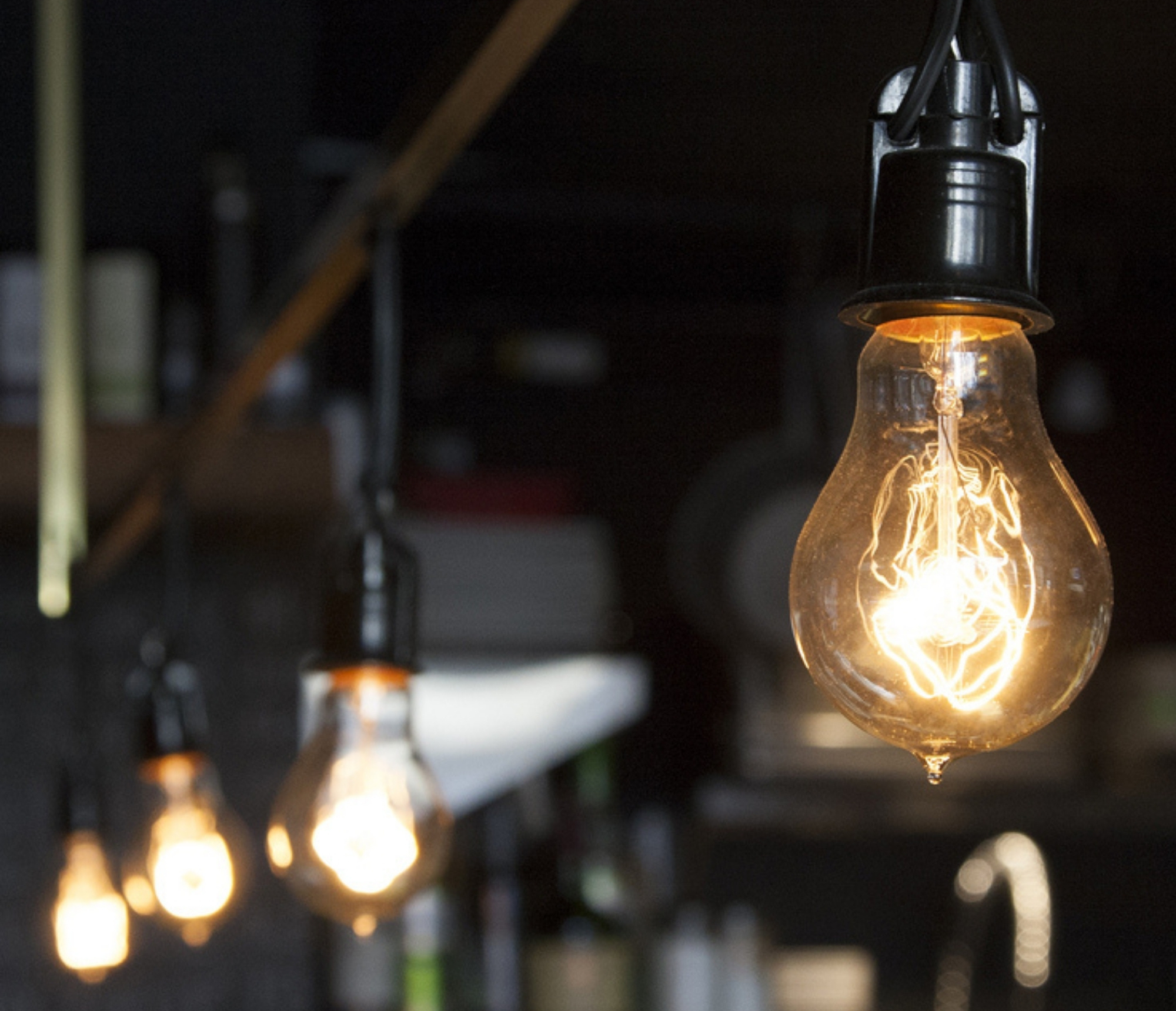
E27 is the most common base in Australia. It’s the large threaded screw cap found in pendant lights, floor lamps, table lamps, many outdoor wall fittings and statement decorative globes. If you’ve bought a filament-style globe in a hardware store recently, there’s a strong chance it was an E27 bulb. The thread screws clockwise until it seats firmly, which takes about three full rotations on a standard fitting.
B22, the bayonet cap
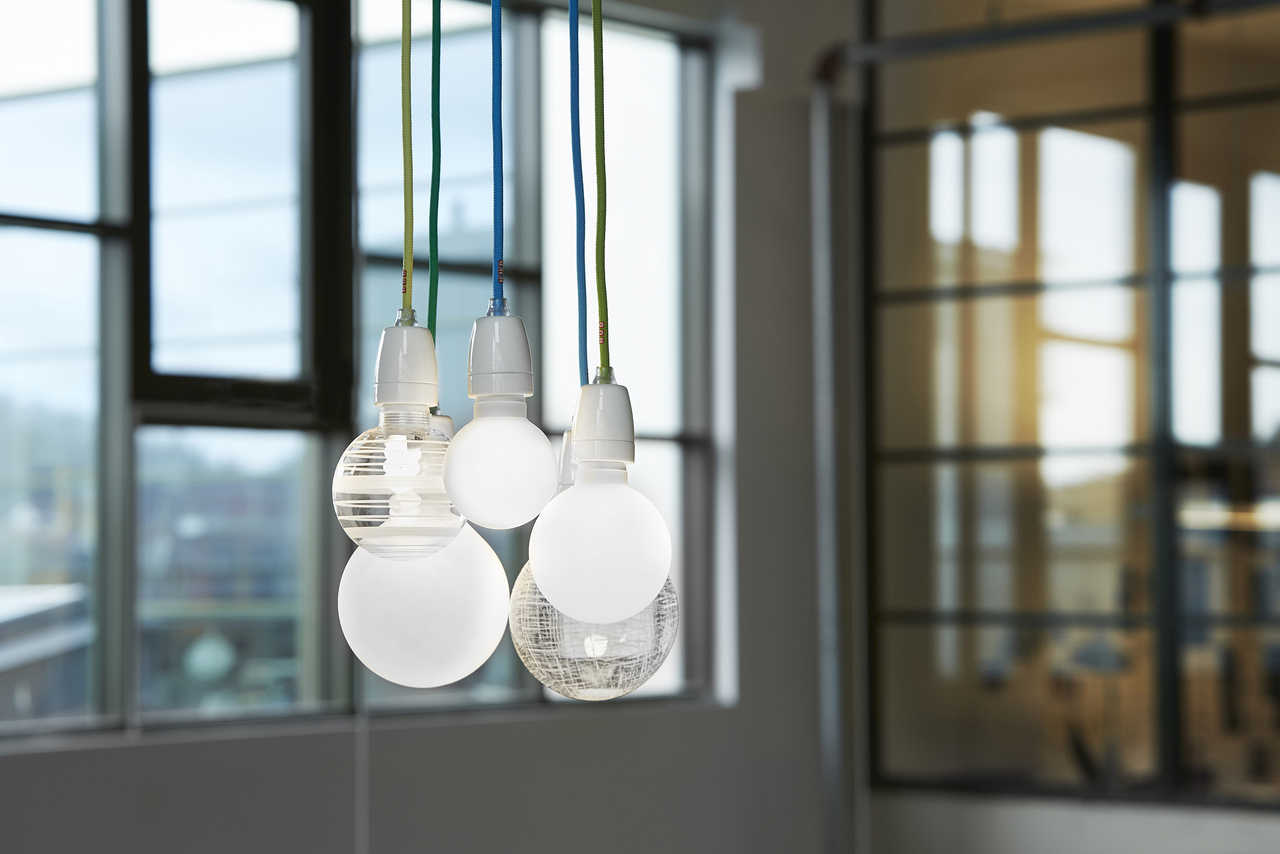
B22 is the push-and-twist base that older Australian homes were wired around. You’ll still find it in many ceiling oyster fittings, some pendants and a lot of bedside lamp shades. To remove a B22 globe, push in gently and rotate a quarter-turn anti-clockwise. To fit one, line up the two pins with the slots, push and rotate clockwise until it clicks. B22 bulbs are widely available in LED versions with the same shapes and colour temperatures as E27, so running into one in an older fitting isn’t a problem.
E14, the small Edison screw
E14 is a 14 mm threaded screw, roughly half the diameter of E27. It’s the base you’ll find inside candelabra-style fittings, some small wall sconces, decorative chandeliers and certain table lamps with narrow lamp holders. The installation method is identical to E27, just smaller. If you’re replacing globes in a chandelier, check whether the fitting is E14 or E27 before ordering, because they look more similar than you’d expect when the lamp shade is in the way.
GU10, the twist-lock spotlight
GU10 is a bi-pin base where the two pins have a wider foot, so the globe locks in with a push-and-quarter-turn motion (similar to a bayonet, but the pins are thicker at the tip). It’s used almost exclusively in recessed downlights and adjustable track spotlights that run on 240V mains. The ‘10’ refers to the 10 mm spacing between pin centres. GU10 bulbs are a direct LED replacement for older 50W halogen downlights and most LED versions draw 5 to 7W for equivalent output. Check the product page for the specific globe, because not all GU10 LEDs are dimmable.
G9, the loop-pin base
G9 is a compact loop-pin base, two small ceramic loops spaced 9 mm apart. It’s common in small wall lights, picture lights, some pendants and many European-style fittings. G9 LED capsules are a straightforward swap for older halogen G9s and use around 2 to 4W versus the 25 to 40W of the halogens they replace. No tools required, just pull the old one straight out (with the power off) and press the replacement in.
MR16, the 12V spotlight
MR16 looks similar to GU10 in the fitting but it runs on 12V DC, which means it needs a transformer or driver hidden in the ceiling cavity. The pin tips are straight and narrower than GU10 pins. If you have older recessed spotlights that run through a transformer, they’re almost certainly MR16. Replacing the transformer when switching to LED MR16s is often necessary, so it’s worth having an electrician check compatibility. In a new installation, most electricians now install GU10 downlights to avoid the extra component.
Quick base identification table
| Base code | Type | Voltage | Common location | How to fit |
|---|---|---|---|---|
| E27 | Edison screw | 240V | Pendants, floor lamps, table lamps | Screw clockwise |
| B22 | Bayonet cap | 240V | Ceiling oysters, bedside lamps | Push and twist clockwise |
| E14 | Small Edison screw | 240V | Candelabras, chandeliers, sconces | Screw clockwise |
| GU10 | Twist-lock bi-pin | 240V | Recessed downlights, track spots | Push and twist clockwise |
| G9 | Loop pin | 240V | Wall lights, picture lights | Pull straight out, push straight in |
| MR16 | Bi-pin (straight) | 12V DC (via transformer) | Older recessed spotlights | Push and twist clockwise |
LED equivalents, lumens and watts
Wattage used to be the shorthand for brightness. With LEDs it no longer works, because an 8W LED can easily match a 60W incandescent. Lumens are the correct measure of light output. As a rough guide, 800 lumens is roughly equivalent to a 60W globe, 470 lumens to a 40W globe and 1,100 lumens to a 75W globe. Most LED packaging shows both figures, so you can cross-reference easily.
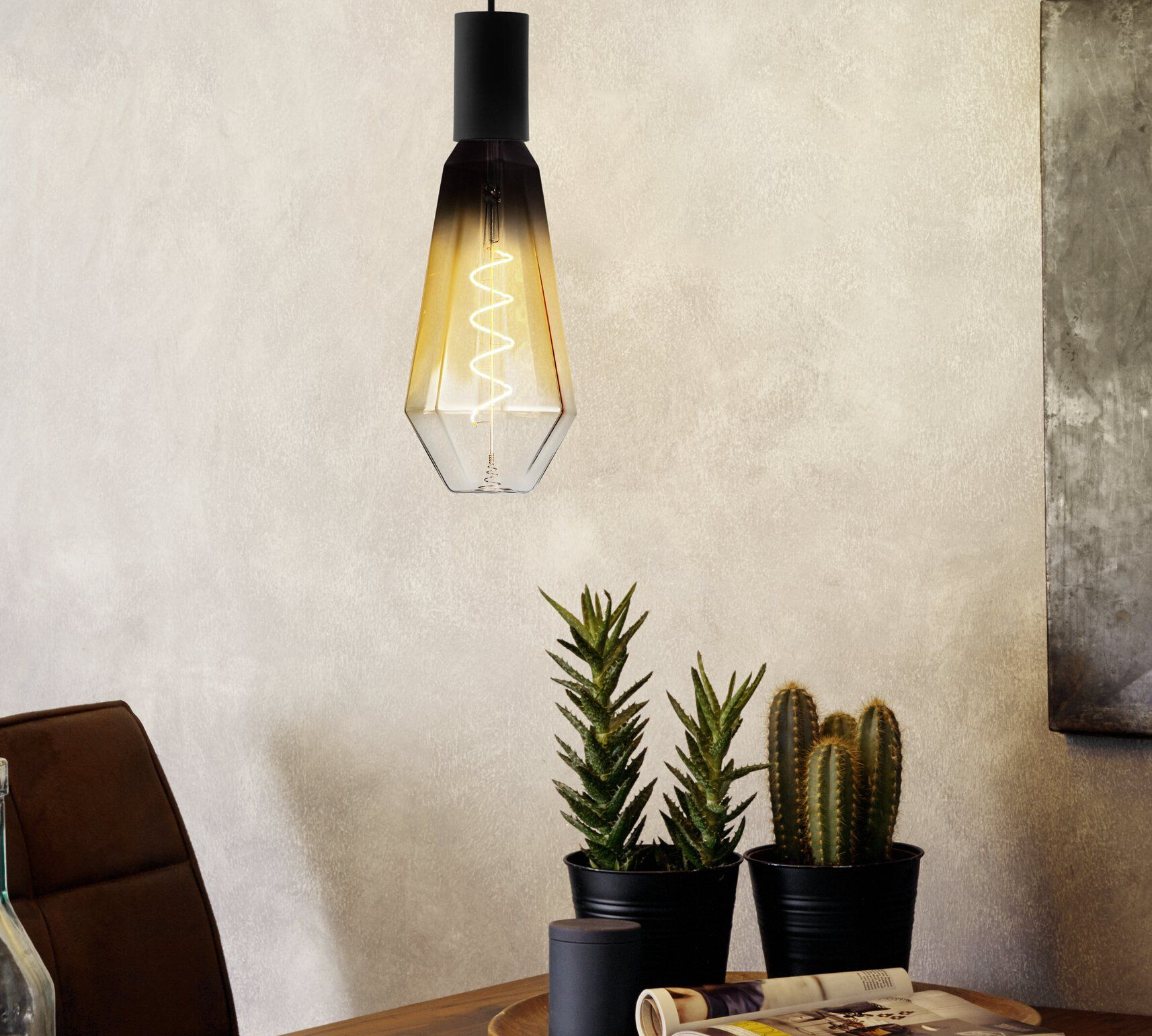
Colour temperature is also worth knowing. Warm white sits around 2,700K and suits living rooms and bedrooms. Cool white (4,000K to 5,000K) is better for kitchens, bathrooms and workspaces. Most decorative filament-style E27 globes are in the 2,200K to 2,700K range, which gives that amber, incandescent-like warmth.
One thing to check before buying a dimmable LED: the dimmer switch itself. Most older leading-edge dimmers were designed for resistive incandescent loads and can cause LED globes to flicker, buzz or drop out at low levels. A trailing-edge (or LED-compatible) dimmer resolves this. Electricians can swap a dimmer in a straightforward job, but the hardwiring is licensed work in Australia, so don’t DIY the switchplate itself.
How to find the base on your existing fitting
The easiest method is to remove the old globe and look at the base directly. The code is usually moulded or printed on the base itself or on the glass near the base. If it’s worn off, use a ruler: a 27 mm thread diameter is E27, a 14 mm thread is E14, a 22 mm bayonet is B22. For downlights, check whether the pins have a wider foot at the tip (GU10) or straight narrow pins (MR16).
If the fitting has a maximum wattage label inside the lamp holder, keep within it. That rating is set by the socket materials and the fitting’s heat tolerance. LED globes draw far less wattage than old halogens, so heat is rarely an issue with LED replacements, but check the product page for any enclosed-fitting restrictions, because some LEDs need ventilation to maintain the rated lifespan.
FAQs
Can I use an E27 bulb in a B22 fitting?
No. The physical connection types are completely different, so an E27 globe won’t seat in a B22 holder and vice versa. There are screw-to-bayonet adapters available, but they add length inside the fitting and can affect the look, so it’s usually easier to buy the correct base type from the outset.
What is the difference between GU10 and MR16?
Both are bi-pin spotlight bases, but GU10 runs on 240V mains and has thicker pins with a wider foot. MR16 runs on 12V DC and has straight, narrower pins. You can tell them apart by feeling the pin tips: GU10 pins flare out at the end. If your downlights run through a transformer in the ceiling, they’re almost certainly MR16.
Do LED E27 bulbs work in any E27 fitting?
In almost all cases, yes. The base is standardised, so any E27 LED globe will physically fit an E27 holder. The things to check are the maximum lumen output relative to the fitting’s heat rating, whether the fitting is enclosed (some LEDs need airflow), and whether the globe is dimmable if the circuit has a dimmer switch.
How do I know if my dimmer is compatible with LED globes?
Older rotary or slider dimmers marked for incandescent or halogen loads often cause flickering with LEDs. Look for a dimmer labelled as LED-compatible or trailing-edge. The globe packaging sometimes lists compatible dimmer brands. If you’re in doubt, an electrician can confirm compatibility and replace the switch if needed, since that’s licensed work in Australia.