

Does Brass Oxidise? Caring for Brass Lighting in Australian Homes
2nd Oct 2026
Yes — brass does oxidise. Left unprotected, brass reacts with oxygen and moisture in the air to form a darker, brownish or greenish layer called a patina. Whether that’s a problem or a feature depends entirely on the finish of your fitting and the look you’re going for.
What Actually Happens When Brass Oxidises
Brass is an alloy of copper and zinc. Both metals react with atmospheric oxygen, moisture, and airborne pollutants — a process called oxidation or tarnishing. Over time, the surface develops a patina that shifts the colour from the original warm gold toward darker amber, brown, or in high-humidity environments, a greenish tinge (verdigris). This is the same chemistry you see on old copper roofing and bronze statues.
The rate at which this happens depends on three factors: the presence of a protective lacquer coating, local humidity, and proximity to salt air. In a typical Sydney or Melbourne home with standard 2.4 m ceilings and good ventilation, an unlacquered brass fitting might show noticeable tarnishing within one to three years. In a coastal Queensland home with regular salt-laden sea breezes, that timeline can compress considerably.
Lacquered vs Unlacquered Brass: Know What You Have
Most contemporary brass lighting sold in Australia falls into one of two categories, and knowing which you have will dictate how you care for it.
Lacquered Brass
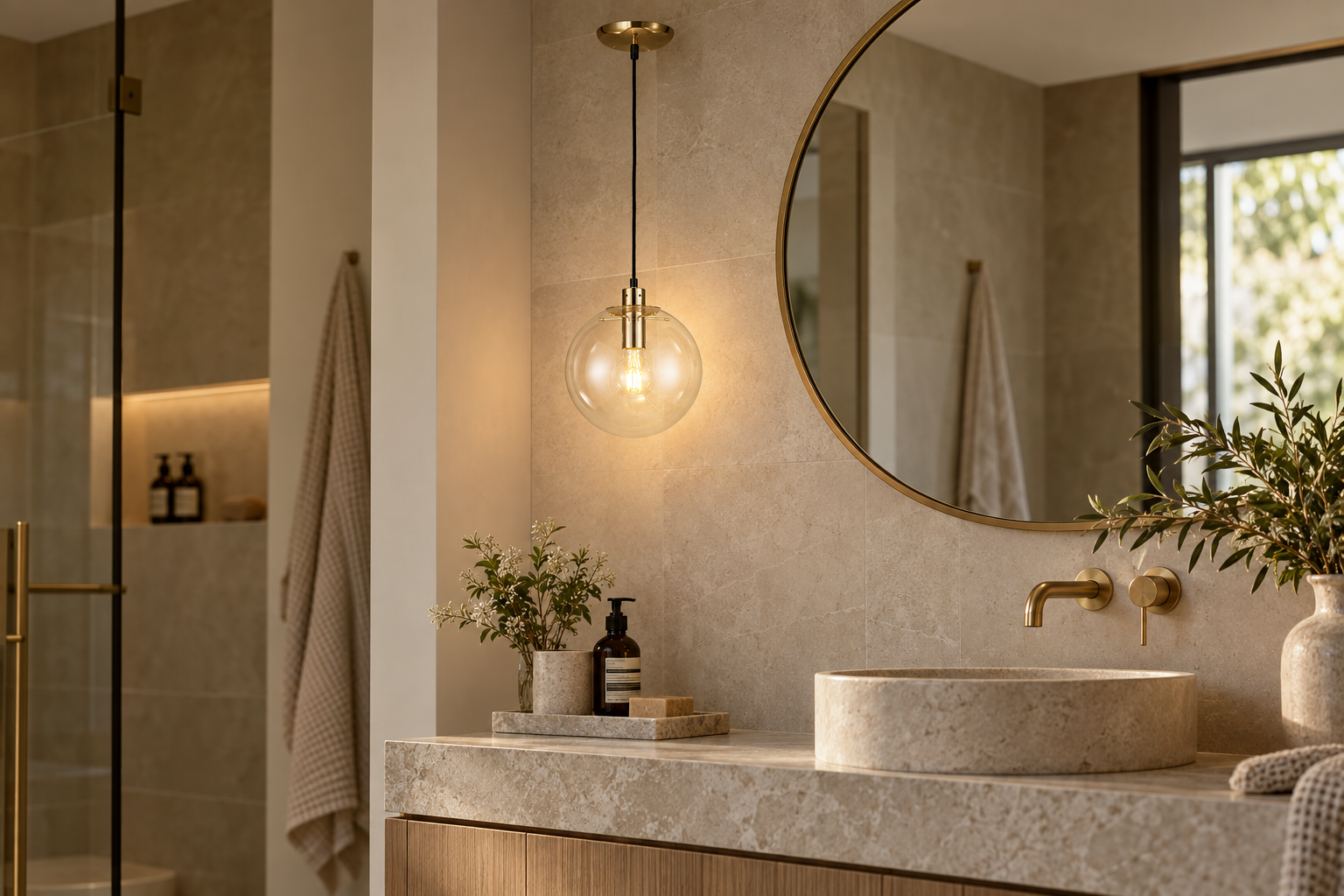
A clear lacquer or powder-coat seals the surface, locking in that polished or brushed gold colour. Lacquered fittings resist tarnishing well under normal indoor conditions. The trade-off is that once the lacquer chips, cracks, or wears through — which can happen around screws, hinges, or high-contact areas — the exposed metal underneath will oxidise faster than untreated brass because moisture can get trapped under the remaining lacquer. Always check the product page to confirm a fitting’s finish type, as this varies by manufacturer.
Unlacquered (Raw) Brass — the “Living Finish”
Unlacquered brass is intentionally left bare. Designers and architects often specify it precisely because it will age, developing a unique patina that deepens over time. In interior design circles this is called a “living finish” — no two pieces age identically, and the result looks richer and more characterful than a static factory colour. If you’re drawn to warm, layered interiors — think maximalist, Mediterranean, or artisan-industrial styles — an unlacquered brass pendant or wall light can be a genuinely beautiful long-term investment.
What Colour Does Brass Turn as It Ages?
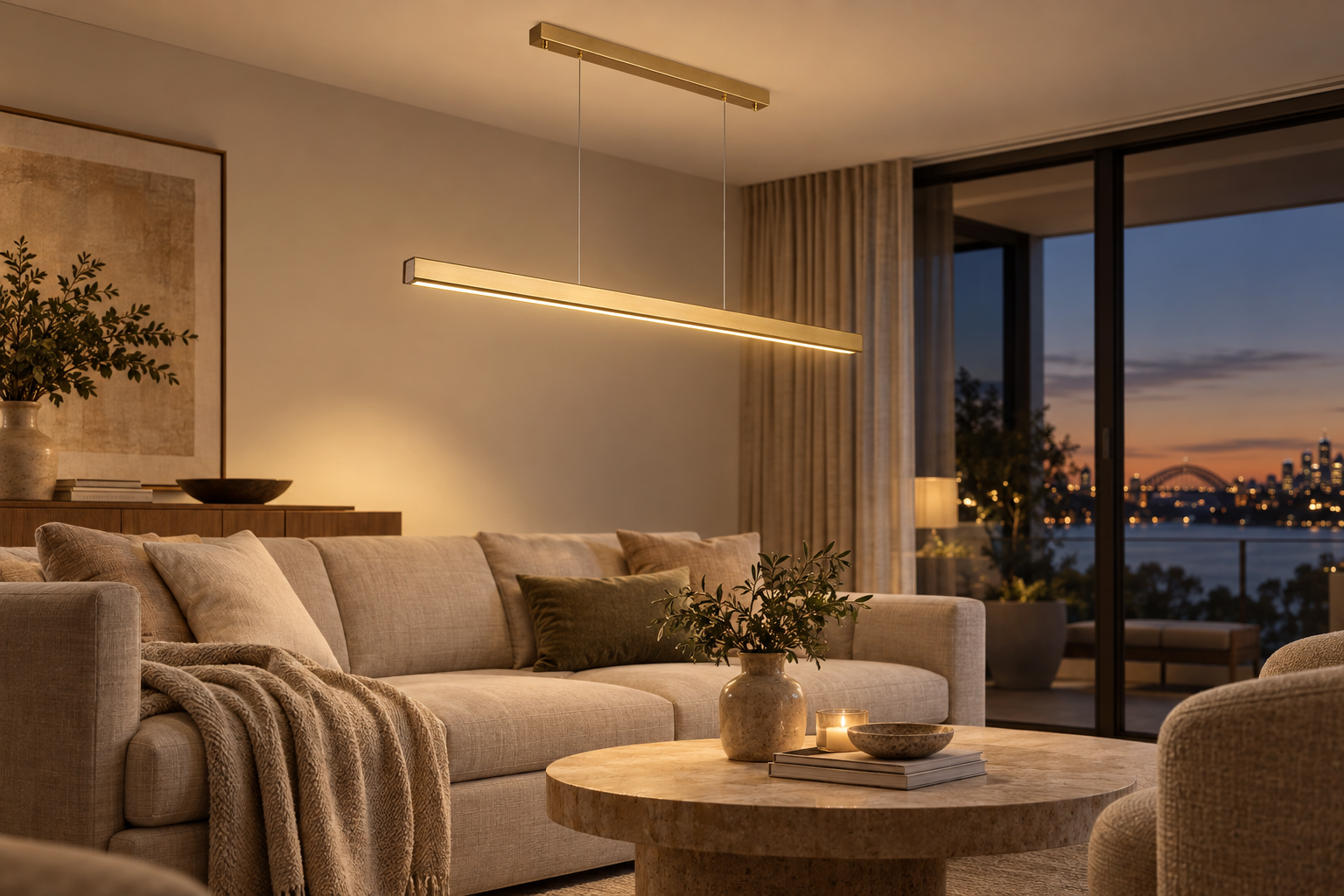
The progression generally follows this sequence: bright gold → warm honey amber → antique bronze-brown → (in very damp or salty conditions) greenish verdigris. Most indoor Australian homes with normal humidity will see brass settle somewhere in the honey-to-bronze range, which many homeowners find warmer and more interesting than the original finish. The verdigris stage typically only appears on outdoor fittings or in coastal environments with significant salt-air exposure — which is why brass wall lights used outside in these areas need either a high IP rating and a protective lacquer, or a commitment to regular maintenance.
Cleaning Dos and Don’ts for Brass Lighting
Whether your fitting is lacquered or not, the cleaning rules are different — and using the wrong approach can cause more damage than the tarnish itself.
For Lacquered Brass
- Do wipe down with a soft, slightly damp microfibre cloth to remove dust and grime.
- Do dry immediately — standing moisture accelerates lacquer breakdown at seams.
- Don’t use abrasive cloths, steel wool, or scouring pads. They scratch through the lacquer.
- Don’t use brass polishes or acidic cleaners (lemon juice, vinegar) on lacquered surfaces — these strip the coating.
- If the lacquer has visibly failed in patches, consider having the fitting professionally re-lacquered or accept that it will now age as a living finish.
For Unlacquered Brass
- Do use a dedicated brass polish (such as Brasso or similar) if you want to restore brightness, buffing with a soft cloth in circular motions.
- Do test any cleaning product on a small, hidden area first.
- Don’t over-polish: stripping the natural patina repeatedly can eventually thin the metal surface on thinner-gauge fittings.
- If you prefer the aged look, simply dust regularly and leave the patina to develop undisturbed.
Always switch fittings off at the wall before cleaning, and avoid getting any moisture inside the lamp holder or near wiring. Any hardwired fitting that requires disassembly for cleaning should be handled by a licensed electrician — hardwiring to 240V mains is not a DIY task in Australia.
Coastal Homes: Extra Considerations
Salt air is corrosive to most metals, and brass is not immune. If your home is within a few kilometres of the coast, factor this in when choosing fittings for outdoor-facing areas, alfresco spaces, or even well-ventilated rooms that regularly catch sea breezes. For outdoor use, look for brass or brass-toned fittings with an appropriate IP rating (IP44 minimum for covered outdoor areas; IP65 for exposed positions) and check whether the manufacturer recommends the fitting for coastal environments. Our range of brass pendant lights includes both indoor and covered-outdoor suitable options — check individual product pages for IP ratings and finish details.
Embracing the Patina: When Aged Brass Is the Point
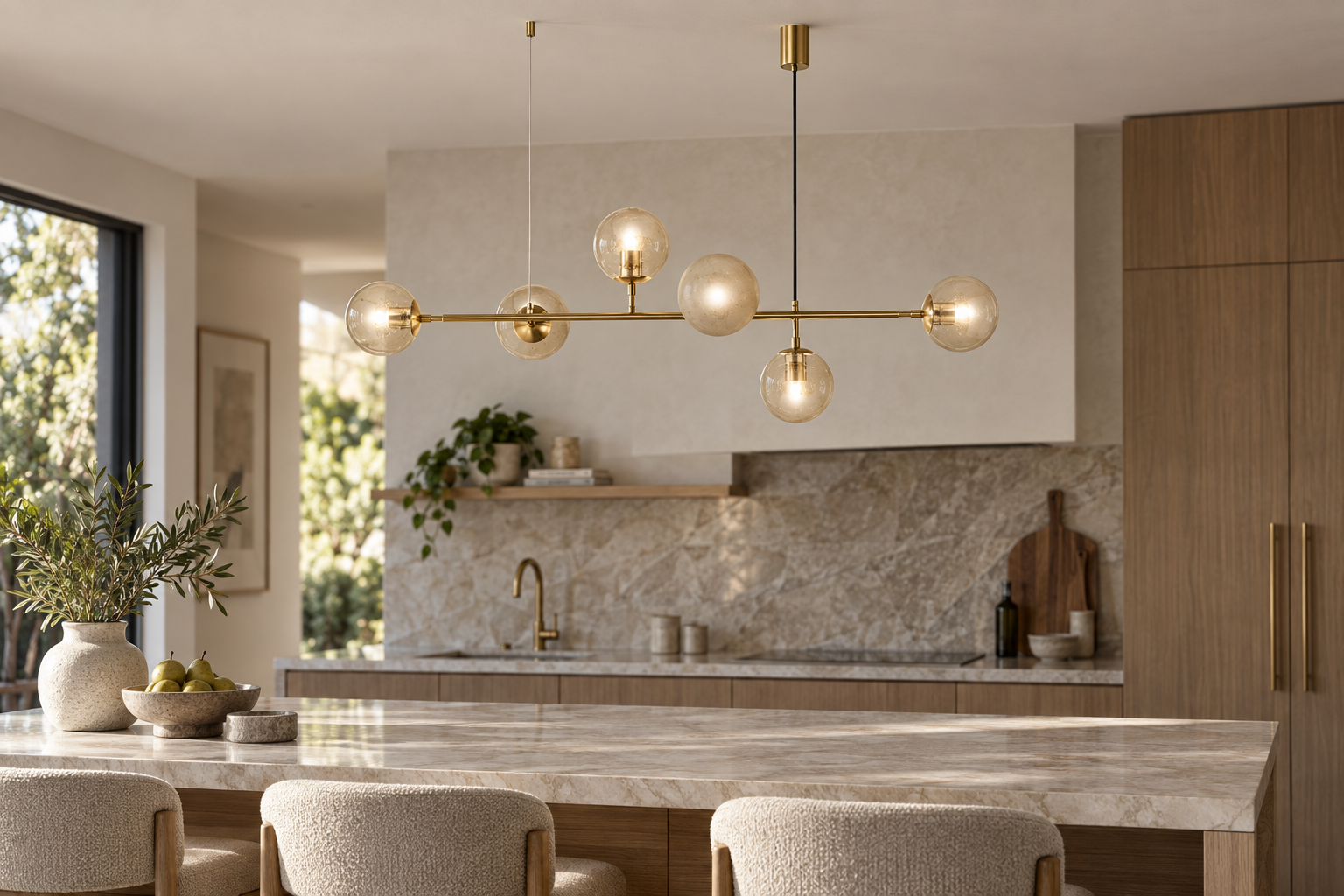
Not all tarnish is a problem to solve. Antique, maximalist, and warm-organic interior styles actively favour the depth that aged brass brings. An aged brass floor lamp that’s developed a honey patina over several years has a visual richness that no factory finish can quite replicate. If this appeals to you, look at brass-coloured floor lamps with an antique or brushed finish — these are manufactured to mimic the aged look from day one, giving you the aesthetic without the waiting game, and they tend to show further natural ageing less obviously than a high-polish starting point.
FAQs
Does brass oxidise faster in humid Australian climates?
Yes. High humidity accelerates the oxidation process by providing more moisture for the surface reaction. In tropical and subtropical parts of Australia — Queensland, Darwin, the Northern Territory — unlacquered brass will tarnish more quickly than in drier southern cities. A lacquered finish or more frequent polishing can help manage this.
Can brass oxidise turn green indoors?
The green verdigris stage generally requires sustained exposure to moisture, salt, or acidic compounds — it’s uncommon on indoor lighting in normal Australian homes. If a fitting is in a very steamy bathroom without adequate ventilation or near a coastal opening, greenish patches are possible on unlacquered brass over time. Good ventilation and regular dusting significantly reduce the risk.
How do I stop brass from tarnishing?
For lacquered brass, the lacquer does the work — just clean gently and avoid anything that damages the coating. For unlacquered brass, applying a thin coat of paste wax (like carnauba wax) after polishing creates a temporary barrier that slows re-tarnishing. Reapply every six to twelve months depending on conditions.
Is tarnished brass still safe to use as a light fitting?
Surface tarnish on the brass body of a fitting is purely cosmetic and has no effect on electrical safety. The oxidation is on the outer metal shell, not the internal wiring or lamp holder. If you have concerns about the condition of any wiring or connections, have a licensed electrician inspect the fitting — do not attempt to open or rewire a 240V hardwired fitting yourself.