

The Best Reading Lamps: How to Choose a Light You Can Actually Read By
5th Oct 2026
The best reading lamps deliver between 450 and 800 lumens directly onto the page, position the light source over your shoulder or beside your dominant eye, and give you some control over brightness so you can dial it down as the evening progresses. Get those three things right and eye strain, headaches, and squinting at paperbacks in dim amber light become problems of the past.
How Much Light Do You Actually Need to Read By?
Lux — lumens per square metre — is the number that matters most at the page. For comfortable reading, most optometrists and lighting designers agree on 300–500 lux at the reading surface. In practical terms, that means a lamp producing around 450–800 lumens needs to be positioned so the light lands on your book or screen rather than bouncing around the room. A 40W equivalent LED globe (roughly 470 lm) is the minimum; a 60W equivalent (800 lm) gives you a margin to play with, especially if the lamp sits further away than ideal.
One quick test: hold your hand flat over the page. If the shadow is crisp and deep, the light is coming from a useful direction. If the shadow is soft and diffuse, the lamp is filling the room beautifully but not helping you read.
Warm or Neutral Colour Temperature?
Colour temperature affects both comfort and how long you can sustain a reading session. A warm white globe (2700–3000K) is pleasant in the evening and causes less melatonin disruption before bed — worth thinking about if your reading habit is the last thing you do before sleep. The trade-off is contrast: warm light makes white paper look slightly cream, which some readers find easier on the eyes and others find slightly muddy.
Neutral white (3500–4000K) improves text contrast and works well for daytime reading nooks, home offices, or anyone reading technical material that requires sustained focus. It’s less ideal at 10pm if you want to wind down. The sweet spot for an all-rounder evening reading lamp is 2700–3000K on a dimmer, so you can start brighter and reduce intensity as bedtime approaches.
Positioning: The Over-the-Shoulder Rule
Where you place the lamp matters as much as how many lumens it produces. The classic advice — light over the non-dominant shoulder — works because it eliminates the shadow cast by your own hand as you hold or turn pages. For a right-handed reader in an armchair, the lamp should come from the left rear. For left-handed readers, reverse that.
Height is equally important. The shade or light source should sit roughly level with your head or slightly above it (somewhere between 120 cm and 145 cm from the floor to the bottom of the shade for a seated reader). Lower than that and you’re looking into the globe; higher and you lose the focused beam onto the page. Adjustable-arm designs let you dial in both the angle and the height, which is why they’re so popular as reading lights.
Floor, Wall, or Table: Choosing the Right Format
Floor Lamps
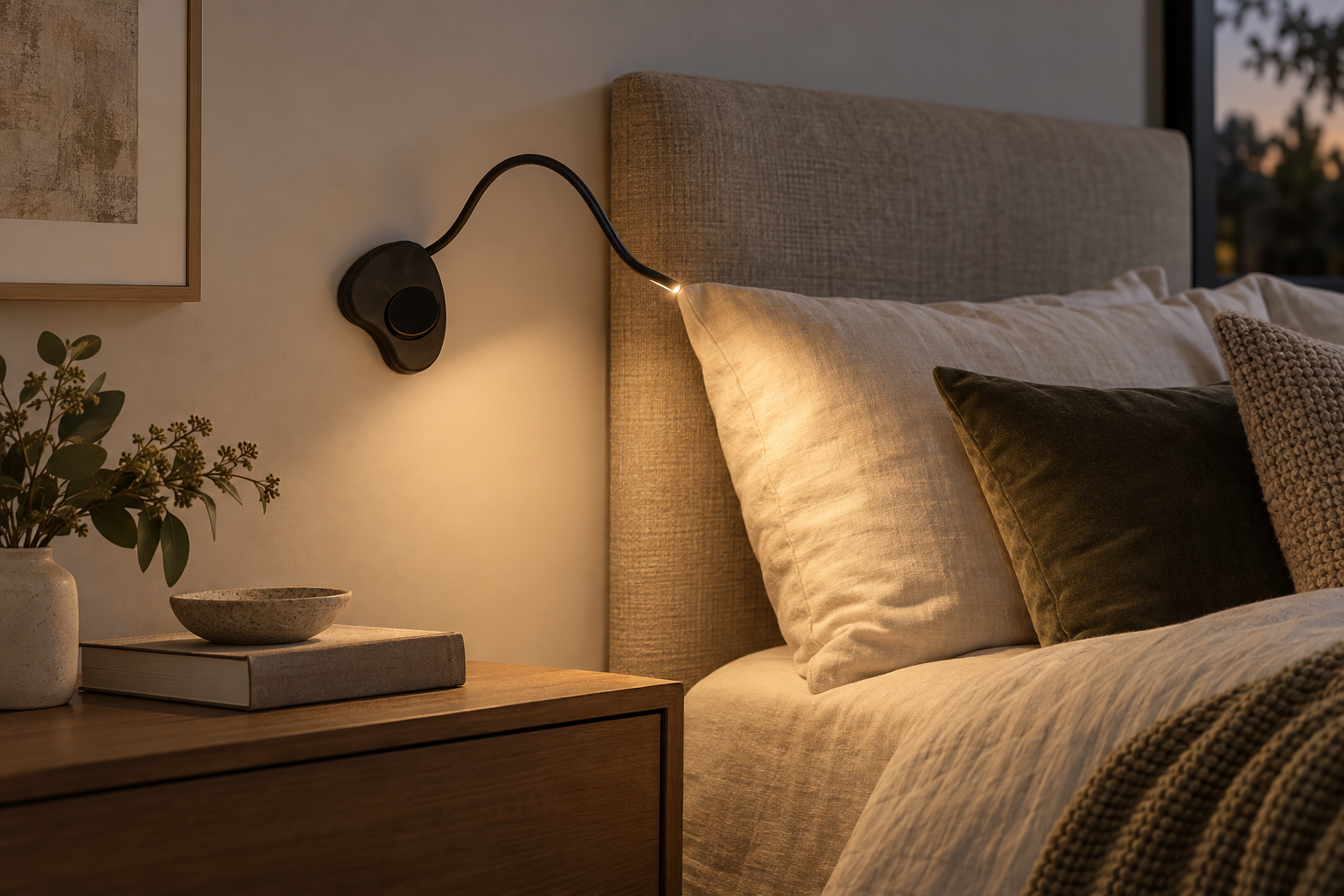
A floor lamp for reading is the most flexible format — you can reposition it without tools, move it between rooms, and no electrician is required (unlike hardwired wall lights). Look for a swing-arm or gooseneck design if you want precise directional control, or a traditional column lamp with a directional shade if your armchair position rarely changes. “Mother and child” floor lamps are a smart choice for couples: the main shade lights a wider area while a smaller adjustable arm directs a focused beam for the reader.
Wall Lights
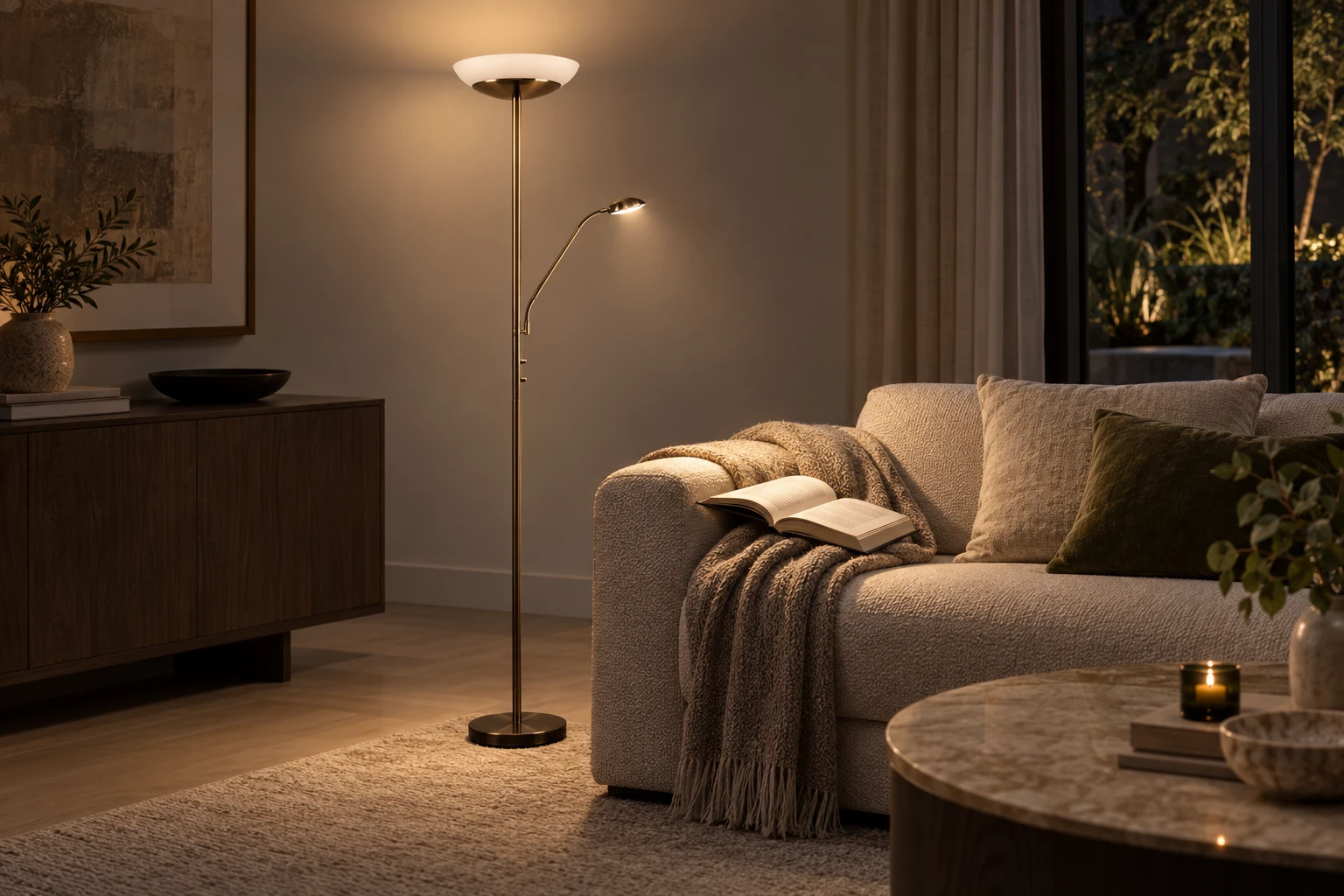
Reading wall lights are the neatest solution where floor space is tight — think bedside reading in a narrow bedroom or a hallway reading nook. A hardwired swing-arm wall light can be angled over the shoulder with surgical precision and never risks being kicked or knocked. Because installation in Australia requires a licensed electrician (hardwiring is not a DIY job), plan them at the fit-out or renovation stage. Plug-in wall sconces exist as a middle ground for renters.
Table Lamps
A bedside table lamp works for reading in bed, but placement is trickier — it needs to be tall enough that the shade clears your line of sight, and far enough forward that it lights the page rather than your pillow. A lamp base of 45–55 cm with a shade that brings the total height to 65–75 cm is a reasonable starting point for most Australian bedside tables.
Why an Adjustable or Dimmable Lamp Is Worth Paying For
Two features separate a genuinely useful reading lamp from one that just looks nice on a product page: adjustability and dimmability. An adjustable arm lets you compensate for the lamp’s position in the room — essential if your armchair is against a wall and you can’t place the lamp perfectly behind your shoulder. Dimmability lets you match the light level to the time of evening, the material you’re reading, and how tired your eyes already are.
Selected models in the reading lamps range are dimmable — always check the product page, because dimmability depends on both the fitting and the globe, and not every combination works. If a lamp isn’t listed as dimmable, assume it isn’t: forcing a non-dimmable driver causes flicker and shortens globe life.
FAQs
What lumens do I need for reading?
Aim for a lamp producing 450–800 lumens directed at the reading surface, which translates to roughly 300–500 lux at the page. A 60W equivalent LED globe (around 800 lm) gives you comfortable headroom, especially if the lamp sits more than 60 cm from your book. If the lamp is dimmable, you can always reduce the output — but you can’t add lumens that aren’t there.
Is warm or cool light better for reading at night?
Warm white (2700–3000K) is generally better for evening reading because it produces less blue light, which is the wavelength most associated with suppressing melatonin and disrupting sleep. Neutral white (3500–4000K) improves contrast and suits daytime or task-focused reading. A dimmable warm-white lamp gives you the most flexibility across different times of day.
Where should a reading floor lamp be positioned?
Place the lamp over your non-dominant shoulder, with the bottom of the shade sitting roughly between 120 cm and 145 cm from the floor when you’re in your reading position. The beam should fall onto the page without the lamp itself being in your direct line of sight. A swing-arm or gooseneck model makes fine-tuning the angle much easier.
Do I need an electrician to install a reading lamp in Australia?
Plug-in floor lamps and table lamps require no electrical work — just plug them into a standard 240V GPO. Hardwired wall lights, including swing-arm reading sconces, must be installed by a licensed electrician under Australian standards. If you’re renovating, it’s worth planning hardwired wall reading lights at the same time as other electrical work to keep costs down.