

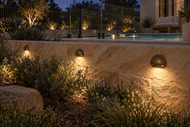
Best 12V Garden Lights in Australia: The DIY-Safe Guide
9th Oct 2026
In Australia, 12V garden lights are the only outdoor lighting system most homeowners can legally install themselves — no licensed electrician required. Because the transformer steps mains 240V down to safe extra-low voltage (ELV), the garden-side wiring falls outside the scope of licensed electrical work, making 12V the go-to choice for DIY landscaping projects across the country. Here’s everything you need to choose the right system, run cable correctly, and get a result that looks as good as a professionally wired setup.
Why 12V Is the Smart DIY Choice in Australia
Australian electrical regulations (AS/NZS 3000) draw a clear line at 50V AC or 120V ripple-free DC — anything below that threshold is classified as extra-low voltage and can be installed by a competent homeowner. A 12V garden lighting system sits well inside that boundary. The transformer itself must be connected to mains power by a licensed electrician (it plugs into a weatherproof GPO, which an electrician can install once), but every metre of low-voltage cable you run through garden beds, every spike you push into the lawn, and every luminaire you connect is DIY-legal.
That single distinction is why 12V garden lights outsell 240V equivalents for residential landscaping. You can stage the project over weekends, shift a fitting if it doesn’t look right, and expand the system later without calling anyone in.
Choosing the Right Transformer
The transformer is the heart of the system — get the sizing wrong and you’ll either blow fuses or end up with dim, uneven output. Add up the wattage of every fitting you plan to run, then choose a transformer rated at least 20–25% above that total. A 60W load wants a 75–80W transformer minimum; headroom prevents the unit running hot and extends its life considerably in the Australian summer.
Look for a transformer with:
- A weatherproof (IP65 or better) enclosure if it will live outdoors near the GPO.
- Multiple output channels so you can split front garden, rear garden, and pathway runs onto separate circuits — useful for zoning and fault-finding.
- A built-in timer or photocell to avoid leaving lights on through the night, which matters both for power bills and for wildlife — especially on coastal blocks where sea-turtle nesting or moth populations may be a consideration.
Most quality 12V systems use a plug-in transformer, which means the GPO connection itself is owner-installable. If you need a new weatherproof GPO added to an exterior wall, that single job requires a licensed electrician — budget around $150–$250 for it and consider it a one-off infrastructure cost.
Cable Runs: Lengths, Gauges, and Voltage Drop
Voltage drop is the silent enemy of 12V systems. Every metre of cable has resistance, and that resistance bleeds voltage away from the fitting — a luminaire designed for 12V that only receives 10.5V will look noticeably dim and may flicker. The practical rules of thumb:
- Keep individual cable runs under 30 metres where possible. Beyond that, step up to a heavier cable gauge (1.5mm² instead of 1.0mm²) or use a star/home-run layout from the transformer rather than a daisy-chain.
- Daisy-chaining is simple but punishing on long runs — voltage drops with every fitting added in series. A star layout, where each fitting (or small group) runs its own cable back to the transformer, gives even brightness across the system.
- Bury cable at least 150mm deep in garden beds, deeper under lawn or paving. Use conduit wherever cable crosses a path or driveway — UV-stabilised conduit protects against spade damage and allows future cable replacement without digging.
Spike vs Fixed Mount: Which Fitting Style Do You Need?
Most 12V garden ranges offer two mounting formats, and choosing the right one upfront saves a lot of rework.
Spike (Ground-Stake) Fittings
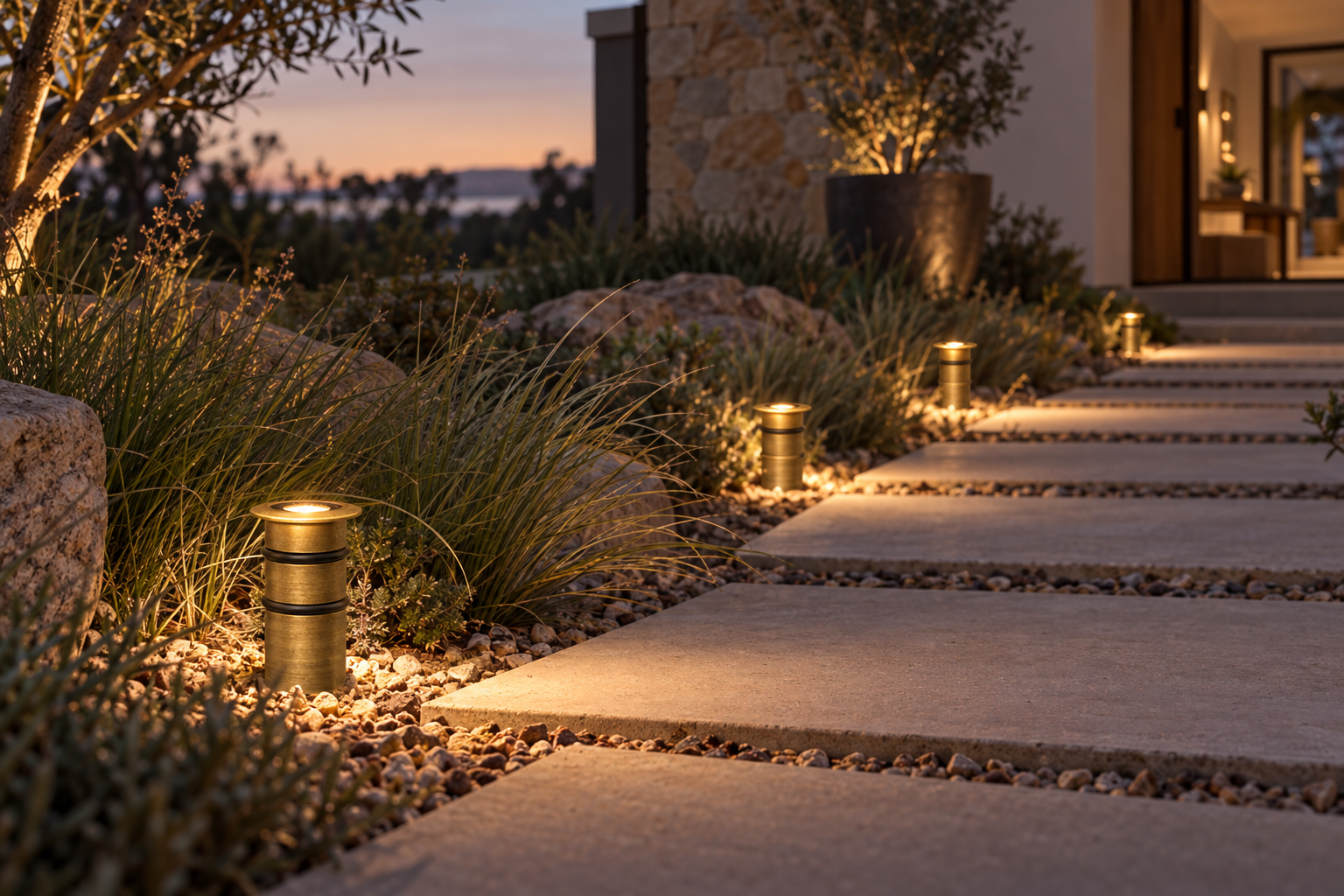
Pushed directly into soil, spike-mount lights are the easiest to reposition — ideal for garden beds that will evolve as plants mature. They suit uplighting trees, highlighting feature plantings, and path-edge illumination. The downside is stability: in loose or sandy soils (common in coastal Australian gardens), spikes can lean or topple after rain. Choose stainless steel or solid brass spikes over zinc alloy if your soil is moist or you’re near the coast — salt air accelerates corrosion aggressively.
Fixed/Recessed and Wall-Mount Fittings
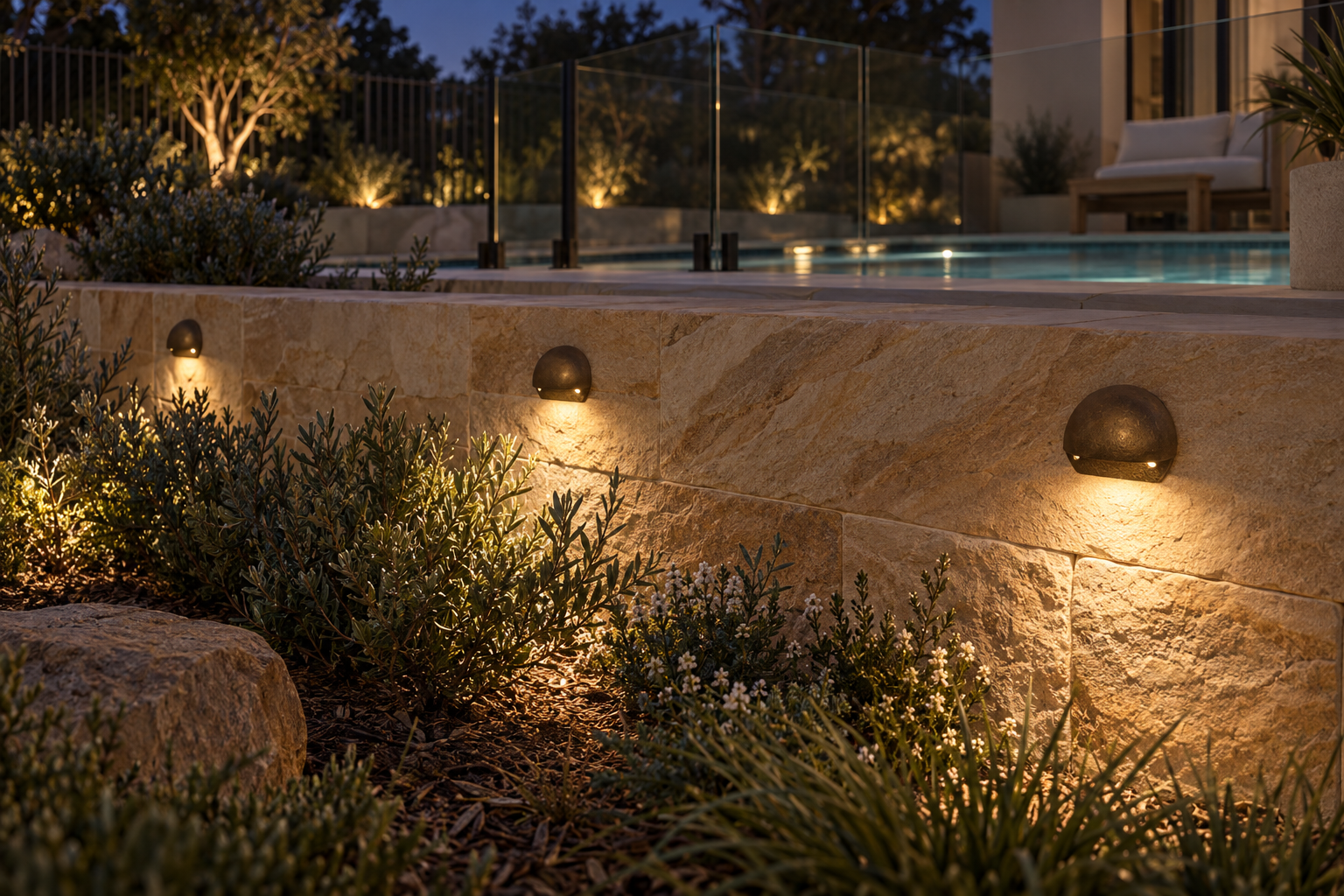
Recessed step lights, wall-mounted path markers, and in-ground uplights are harder to move but deliver a cleaner, more permanent result. They work beautifully on retaining walls, timber decking risers, and rendered garden edges. For step and wall applications, check the IP rating — IP44 is the minimum for a sheltered outdoor area; IP65 or IP67 is better for fully exposed positions or areas that cop direct hose spray. You can explore the full range of garden step lighting options to see what suits your project.
12V Wired vs Solar: An Honest Comparison
Solar garden lights get a lot of attention for their zero-wiring appeal, but the comparison with a wired 12V system isn’t as straightforward as the marketing suggests.
| Factor | 12V Wired | Solar |
|---|---|---|
| Reliability | Consistent every night | Depends on sun hours — dim in winter or shade |
| Light quality | Designer fittings, warm CCT options | Often cool, flat output |
| Installation | Cable run required | No cabling |
| Running cost | Low (LED); small electricity draw | Free once installed |
| Longevity | 10–25 years (brass/copper/bronze) | Battery replacement every 2–3 years |
| Aesthetics | Wide designer range | Limited, largely utilitarian |
For a garden where appearance and consistent performance matter, a wired 12V system almost always wins. Solar makes sense for a remote corner where running cable is genuinely impractical — a back fence line without a nearby transformer point, for instance.
Material Choice for Australian Conditions
Fitting material is a long-term decision. In Australia’s varied climates — coastal salt air, UV intensity, wet tropical summers, and dry inland heat — the wrong material oxidises, bleeds rust stains onto paving, or simply disintegrates within a few seasons.
- Solid brass and solid bronze develop a natural patina and are essentially immune to salt-air corrosion. They’re heavier and more expensive, but fittings in these materials routinely outlast the garden they were installed in.
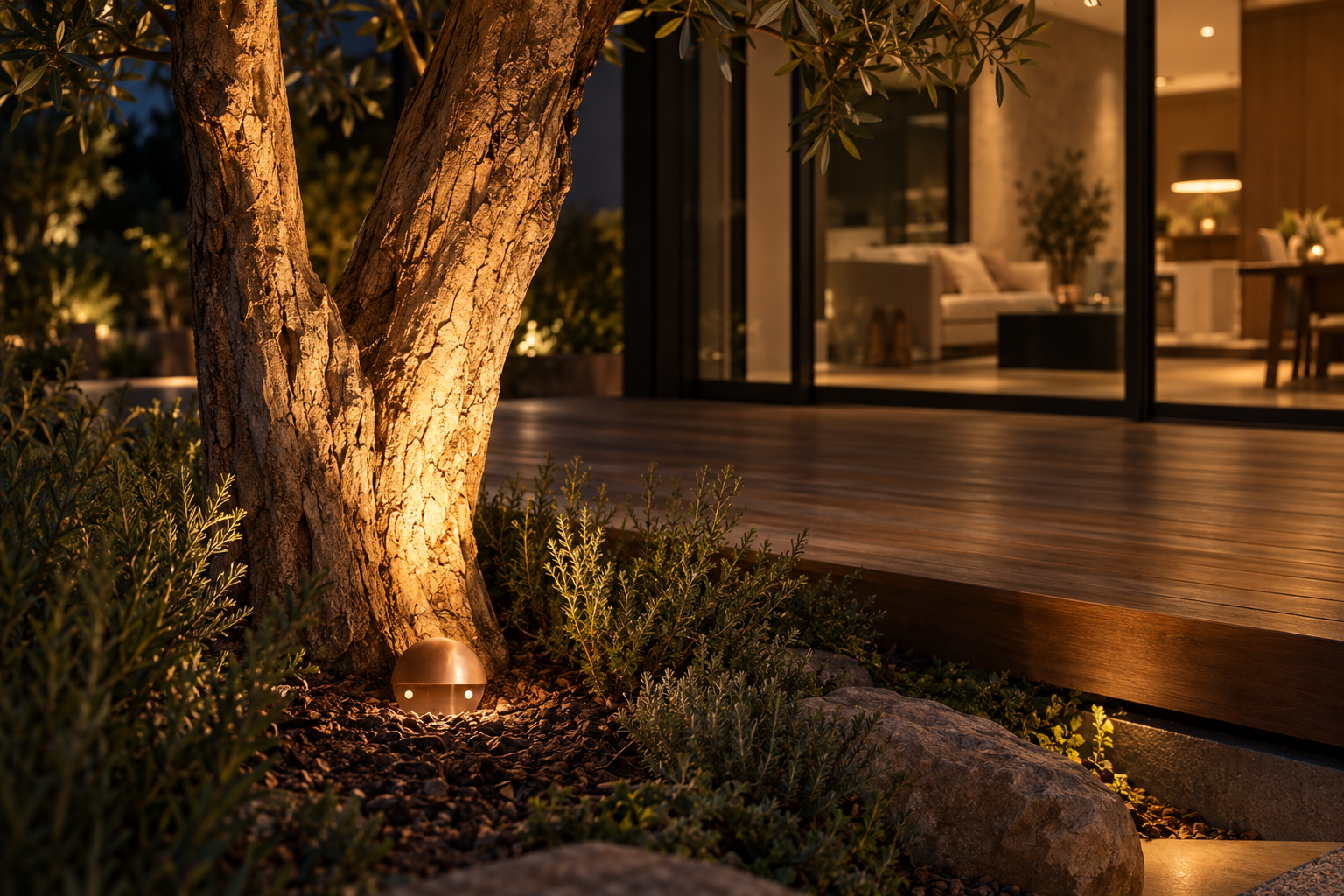
- Solid copper behaves similarly — it will weather to a warm verde patina outdoors, which many people find attractive, particularly in native garden settings.
- Marine-grade (316) stainless steel is the clean, contemporary alternative for coastal installs. Avoid 304-grade stainless near the ocean — it will rust at welds and fixings within a few years.
- Powder-coated aluminium is lightweight and cost-effective inland but can corrode at cut edges and fixings in coastal environments.
Browsing the full garden lighting range will give you a clear sense of which materials and styles suit each part of the garden, from pathways through to feature tree uplighting.
FAQs
Do I need an electrician to install 12V garden lights in Australia?
You need a licensed electrician only to connect the transformer to mains power — typically a one-off job to install a weatherproof outdoor GPO. All the low-voltage cabling, connectors, and luminaires on the garden side of the transformer are DIY-legal under Australian regulations because the system operates below the extra-low voltage threshold.
How many 12V garden lights can I run off one transformer?
Add up the wattage of all your planned fittings and choose a transformer rated at 20–25% above that total. A 100W transformer can comfortably handle around 75–80W of LED garden lights. Exceeding the transformer’s rated load causes overheating and premature failure.
What cable do I use for 12V garden lights?
Most residential 12V garden lighting systems use 1.0mm² or 1.5mm² twin-core low-voltage cable. For runs longer than 20–25 metres, or where you’re connecting more than two or three fittings in series, step up to 1.5mm² to minimise voltage drop and keep brightness consistent across the system.
Are 12V garden lights bright enough for security or task lighting?
Modern 12V LED garden fittings are genuinely capable — selected models deliver enough lumens for pathway safety and to illuminate entertaining areas comfortably. For hard security lighting (motion-activated floodlights covering large areas), a 240V fixture installed by an electrician is typically still the better tool. For ambience, feature lighting, and safe path navigation, 12V LED performs excellently.