

Bathroom Lighting Guide: IP Ratings, Zones and Vanity Lights for Australian Bathrooms
19th Oct 2026
The IP rating you need depends entirely on where in the bathroom the fitting will go. Australia follows AS/NZS 3000 bathroom zone rules, and getting this wrong isn’t just a compliance issue, it’s a safety one. An electrician must do all hardwired installation, full stop.
Bathroom Zones Explained: 0, 1, 2 and Beyond
AS/NZS 3000 divides the bathroom into zones based on proximity to water. Understanding which zone a fitting sits in tells you the minimum IP rating it must carry.
Zone 0 is inside the bath or shower basin itself, meaning any fitting actually submerged or within the water vessel. This zone requires IP67 minimum. In practice, very few domestic light fittings are rated for Zone 0, and most bathrooms don’t have any lighting here at all.
Zone 1 extends directly above the bath or shower area, from the floor up to 2.25 metres. If your showerhead is directly below a ceiling rose and that rose sits within the horizontal footprint of the shower, it’s in Zone 1. IP44 is the minimum here, though IP65 is a more comfortable margin and worth choosing when the products are available.
Zone 2 is the 0.6 metre band surrounding Zone 1, measured horizontally outward. Think of it as the splash zone around the shower screen or bath edge. IP44 is required in Zone 2 as well.
Zone 3 covers everything else in the bathroom beyond 0.6 metres from any water source. Standard (non-rated) fittings can technically be used here, but many designers and electricians still specify IP20 or better as a sensible precaution, especially in compact bathrooms where “outside the splash zone” is hard to guarantee.
Always confirm zone placement with your licensed electrician before purchasing. The measurements above are the general rule, but ceiling heights, shower configurations and specific product certifications all affect what’s compliant for your install.
Vanity Lighting: Why Position Matters More Than Wattage
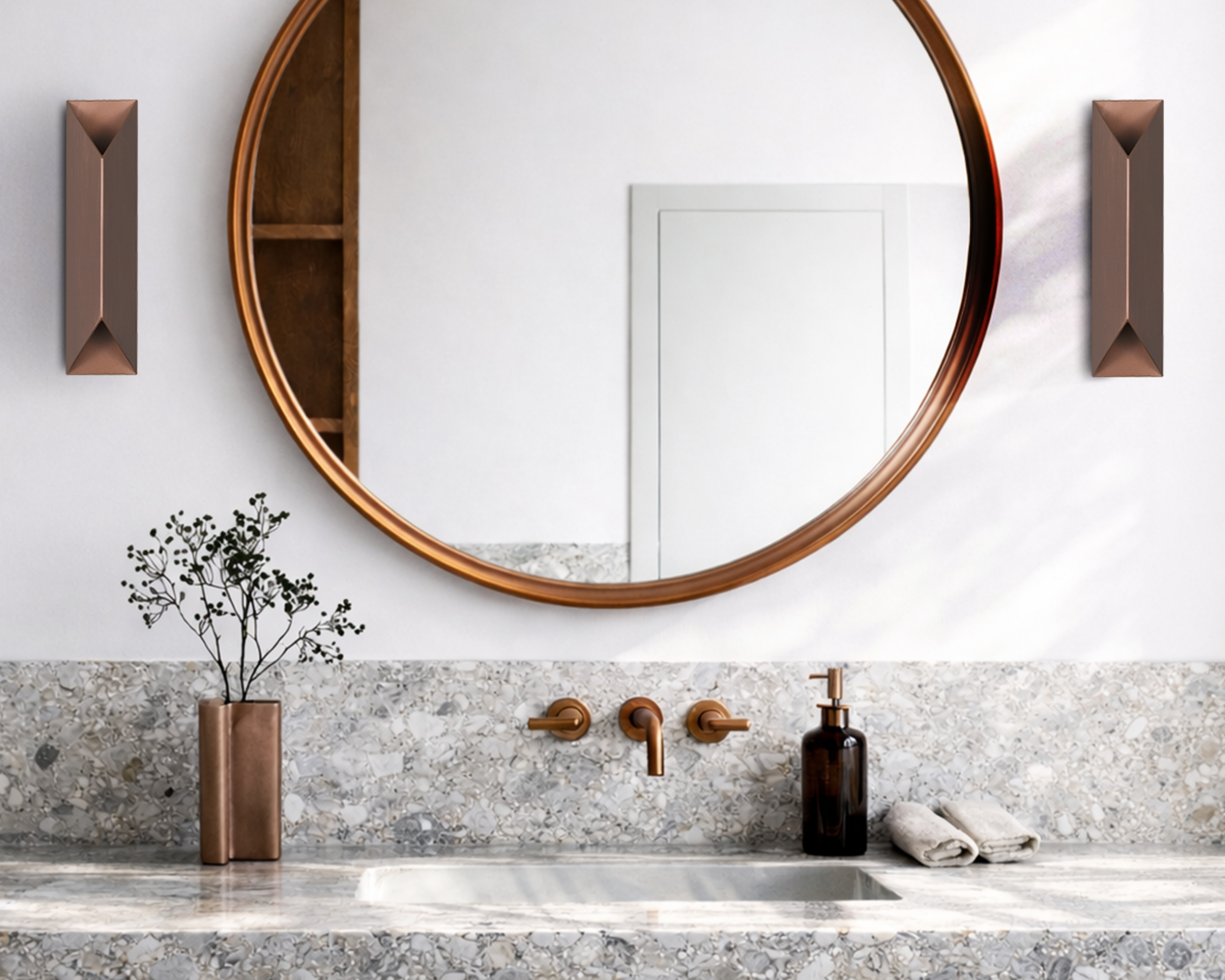
A single downlight centred above a bathroom mirror is the most common vanity lighting mistake we see. It throws light onto the top of your head and creates shadows across your face, which makes tasks like applying makeup or shaving genuinely difficult. Side-mounted wall lights at face height fix this immediately.
The target mounting height for bathroom vanity lights is roughly 1,500 to 1,650mm from the floor, which puts the light source at or just above eye level for most adults. Fitting one light either side of the mirror, rather than one above it, gives even, shadow-free illumination across both sides of the face. If your mirror is wide and side placement isn’t practical, an above-mirror bar or multiple points along the top is a better compromise than a single point source.
For a standard 600mm basin vanity, two wall lights spaced about 500mm apart (centred on the mirror) works well. Wider double vanities benefit from wider spacing, sometimes up to 900 to 1,000mm between centres, but check that the fittings still fall within Zone 3 unless they’re rated for closer proximity.
Warm or Cool Colour Temperature for Bathrooms
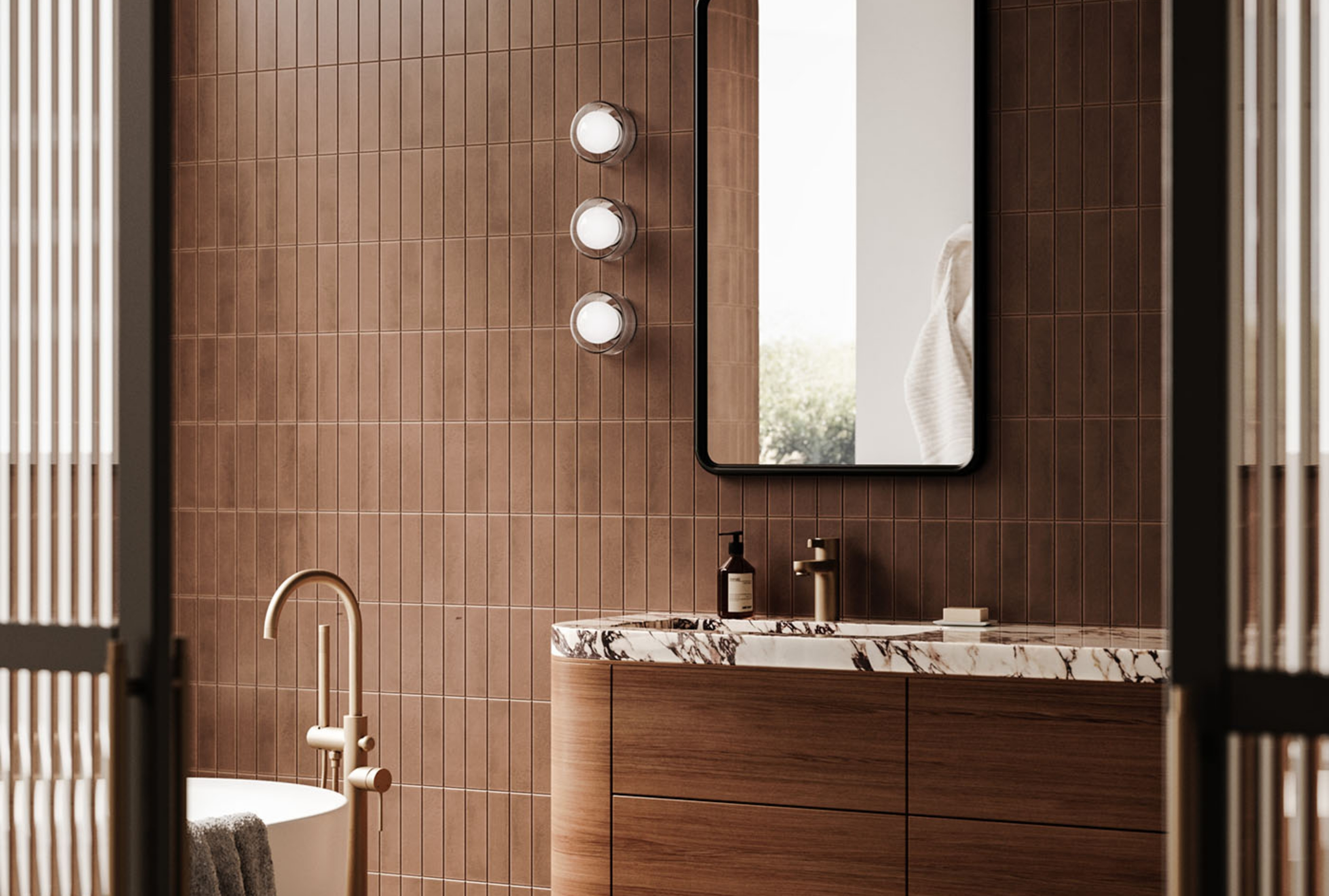
This comes down to how the bathroom is used. A warm white globe (around 2,700K to 3,000K) is flattering to skin tones and pairs well with timber, stone and warm-toned tiles. Most people find it more pleasant first thing in the morning. The downside is that it can make whites look slightly yellow, which matters if you’re colour-matching clothing or checking skin conditions.
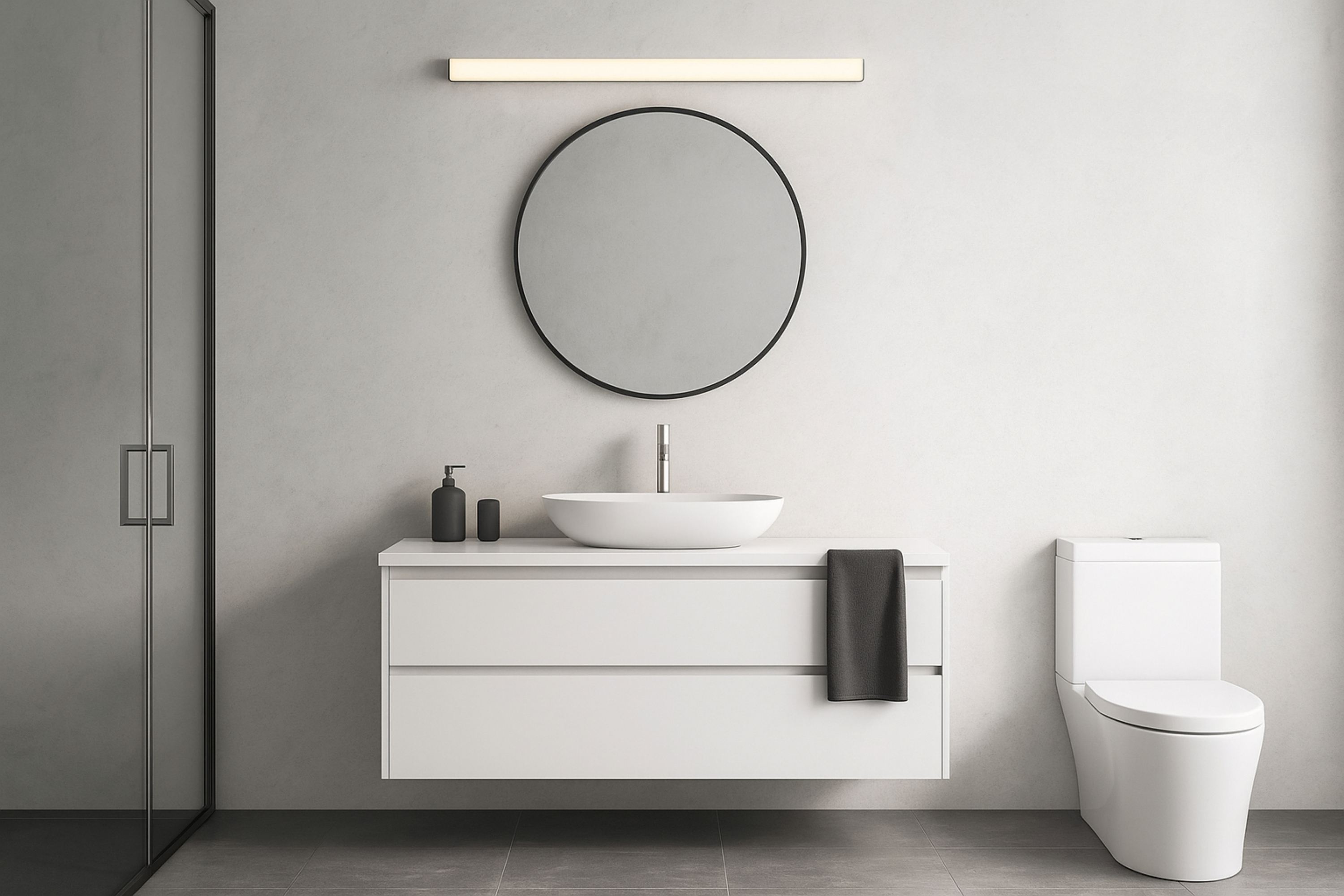
Cool white (4,000K) renders colours more accurately and feels crisper, which is why it’s popular in clinical and commercial settings. For a home bathroom, 4,000K works well in a modern, all-white scheme or where the vanity is the primary place for grooming tasks requiring good colour accuracy.
A practical approach: use 2,700K to 3,000K for the main bathroom wall lights or ceiling fitting, and choose a vanity mirror with built-in adjustable colour temperature if you want flexibility. Some LED vanity mirrors offer a daylight mode at 5,000K to 6,500K specifically for makeup application, keeping the ambient lighting warmer.
Check whether the specific fittings you’re considering come with globes included or require separate purchase. Colour temperature options vary across the bathroom lighting range, and selected models are dimmable, which gives you the most control over mood and practicality across the day.
Choosing Bathroom Wall Lights
Beyond IP ratings and colour temperature, the physical form of a bathroom wall light affects how it performs. Globe-diffusing fittings with milky or frosted glass spread light broadly, which reduces harsh glare. Open or directional fittings work well as accent or task lighting but can be too directional if they’re the only source in the room.
Finish durability matters in Australian bathrooms, particularly in coastal areas where salt air accelerates corrosion on exposed metal. Powder-coated or lacquered brass tends to hold up better than raw or lightly treated chrome in these conditions. Check product specifications for finishes rated for humid environments, and rinse fittings in sea-facing properties with a damp cloth periodically to clear salt residue.
Compact bathrooms with 2.4 metre ceilings (the Australian standard) often benefit from a flush or semi-flush ceiling fitting combined with wall lights rather than trying to do everything with one overhead source. Layering two types of fitting gives you flexibility and avoids the flat, shadowless look of a single central downlight.
FAQs
What IP rating do I need for a bathroom light?
It depends on the zone. Zone 1 (above the bath or shower up to 2.25m) and Zone 2 (the 0.6m band surrounding it) both require at least IP44. Zone 3, which is everything else beyond 0.6m from a water source, has no mandatory IP requirement under AS/NZS 3000, though IP20 or better is sensible. Always confirm with your electrician before purchasing.
Can I install bathroom lights myself?
No. All hardwired electrical work in Australian bathrooms must be carried out by a licensed electrician. This includes replacing like-for-like fittings in wet areas. Battery-operated or low-voltage plug-in accessories are an exception, but ceiling roses, wall plates and any mains-connected fitting require a licensed tradesperson.
Where should vanity lights be positioned relative to the mirror?
Either side of the mirror at roughly 1,500 to 1,650mm from the floor is the most effective placement for face-level illumination. A single light mounted above the mirror is a common alternative but produces more shadows. Two lights flanking the mirror give more even coverage for grooming tasks.
What colour temperature is best for a bathroom vanity mirror lamp?
2,700K to 3,000K is warm and flattering for general use. If colour accuracy matters, 4,000K renders truer whites and is better for detailed grooming or makeup. Some vanity mirrors include adjustable colour temperature, which is a practical solution if you use the bathroom for both relaxed morning routines and precise tasks.